
A Brilliant Solution

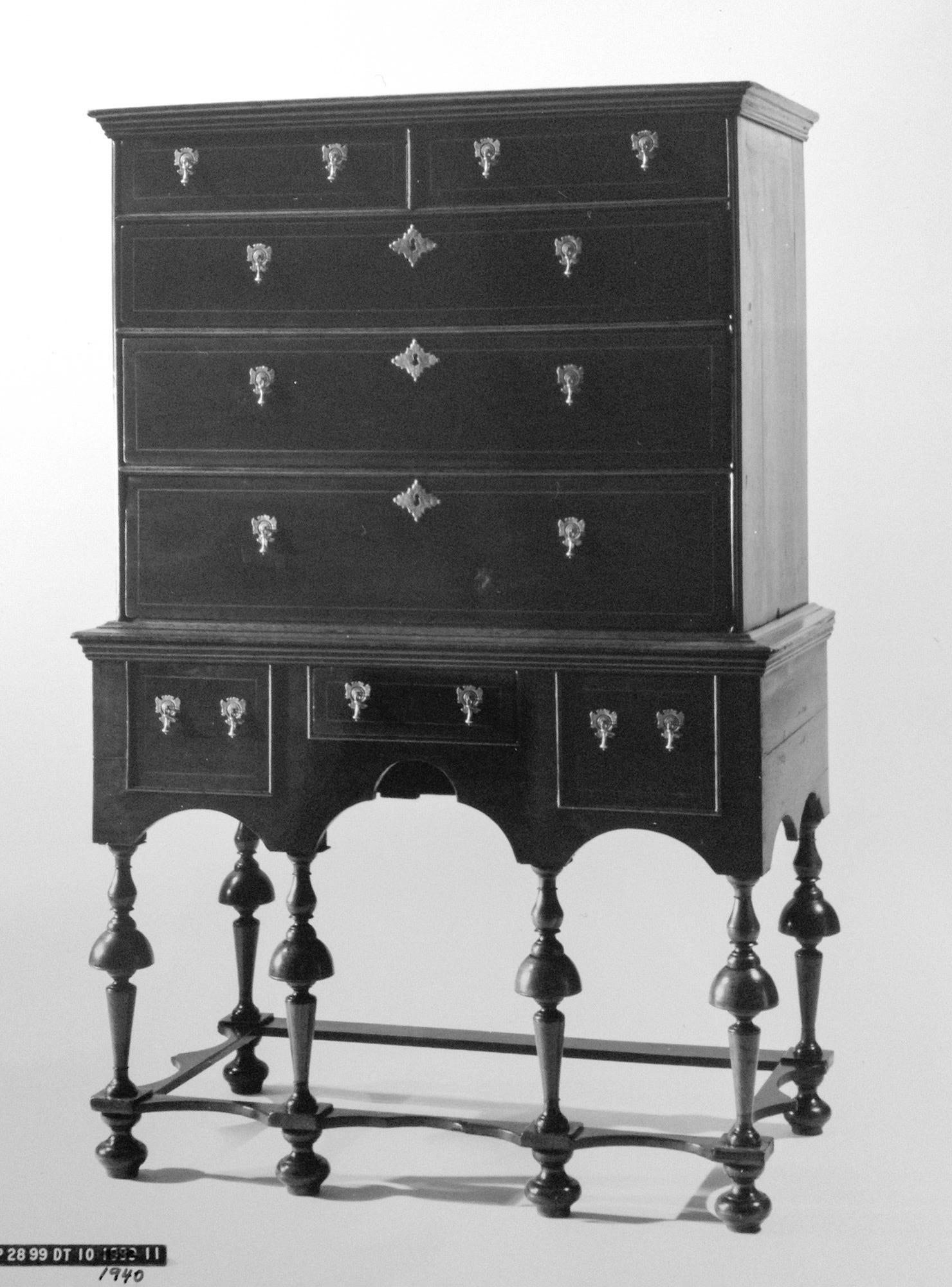
The high chest in fig. 1 has been on loan to the Philadelphia Museum for Art since 1940. When it came to the museum, it was owned by the Commissioners of Fairmount Park. In 2010, “the historic Fairmount Park Commission was officially consolidated with the city's Department of Recreation to create a unified Department of Parks and Recreation.”1 I suspect it is now under their ownership. The brass pulls and escutcheons are replaced, the applied bead along the bottom rails has been trimmed flush with the carcase, and laminations for width are missing from the stretchers.
Aside from its brief appearance in the Worldly Goods exhibition at the PMA, October 10, 1999 to January 2, 2000, the chest has been in storage. As a loaned object, it is not illustrated on the museum’s website.
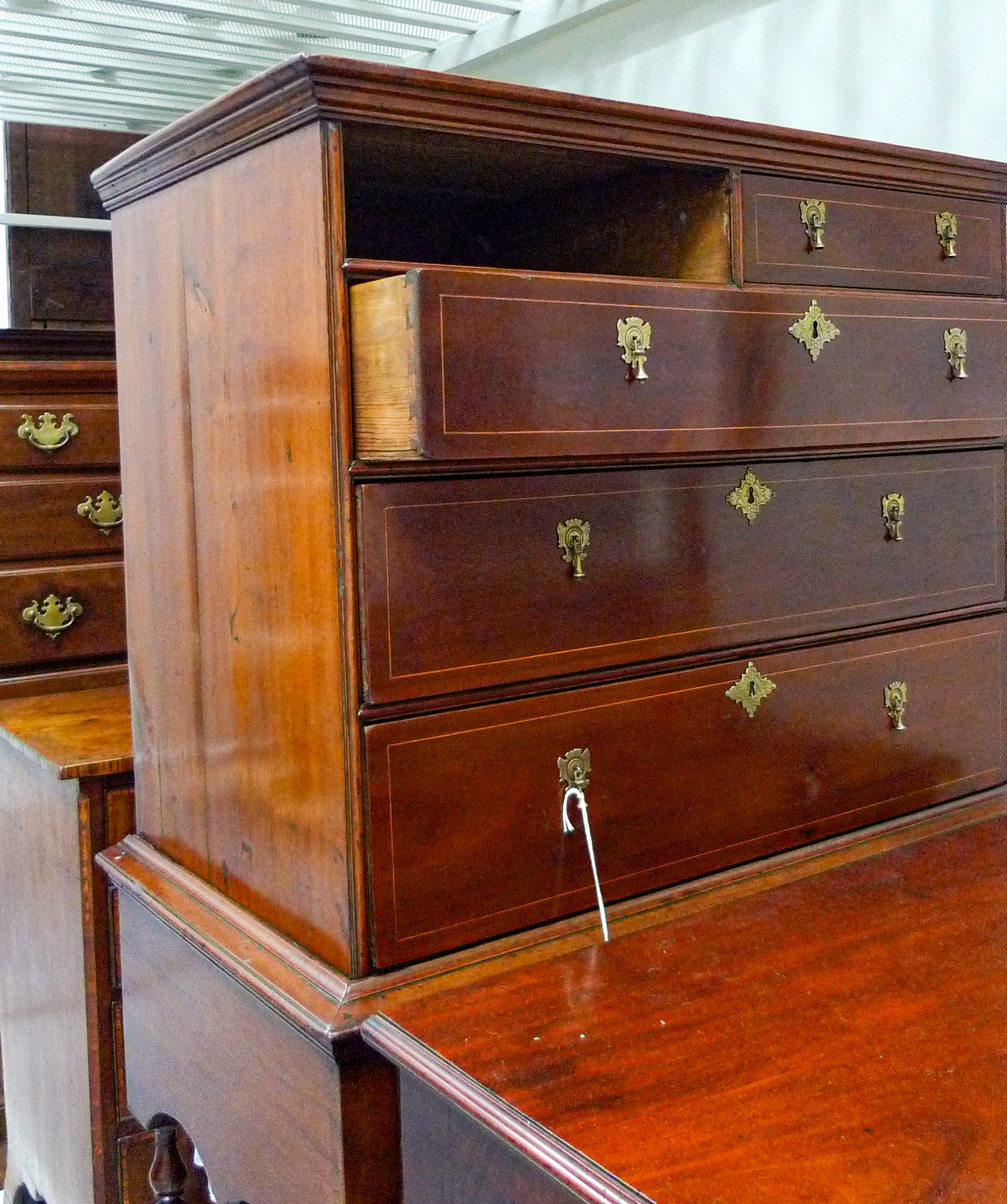
An unusual detail of the chest is the simple line inlay of the drawer fronts.2 Chests on high stands, like the chest in fig. 1 were popular in England and its colonies from the turn of the eighteenth century into the 1730s.3
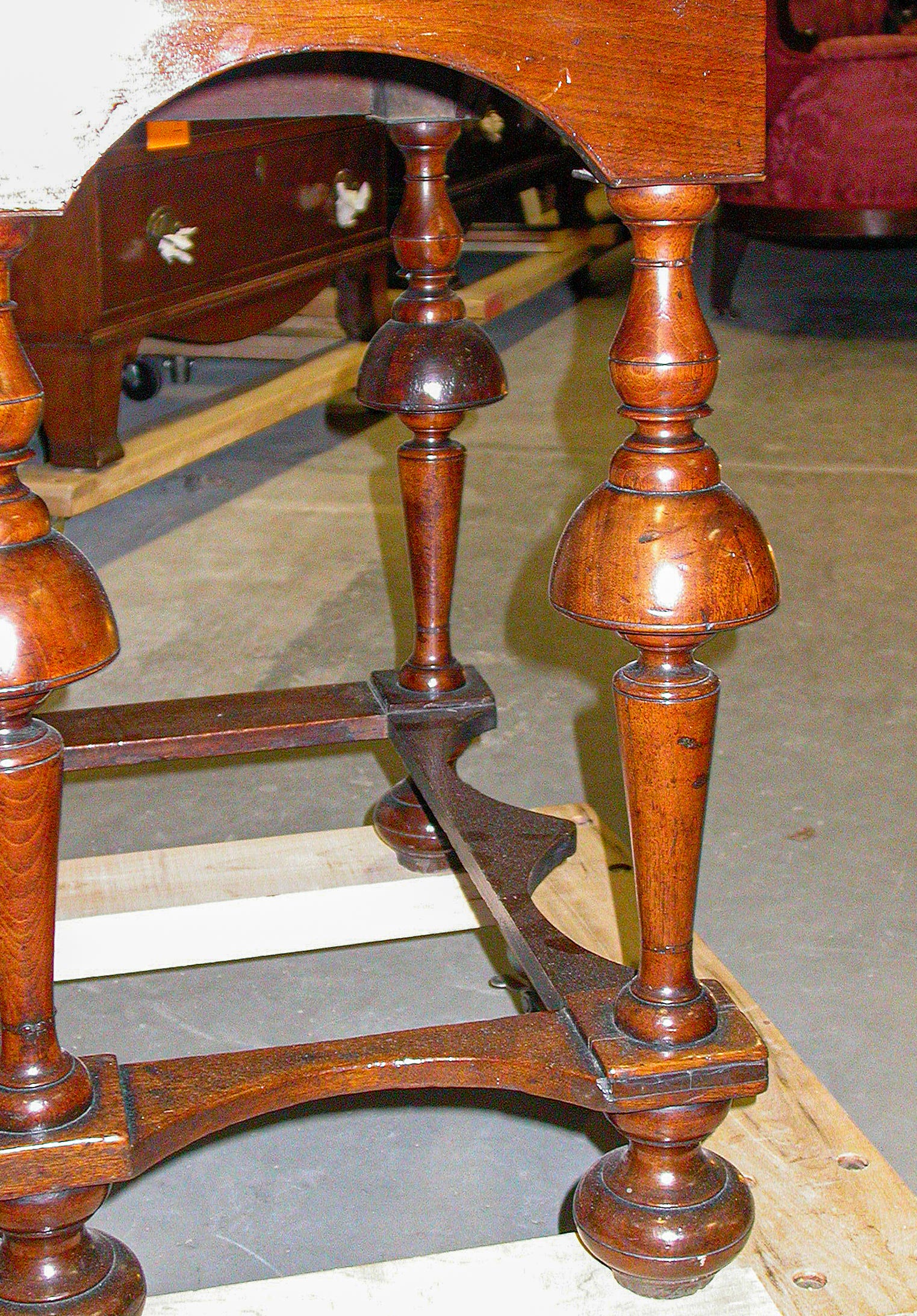
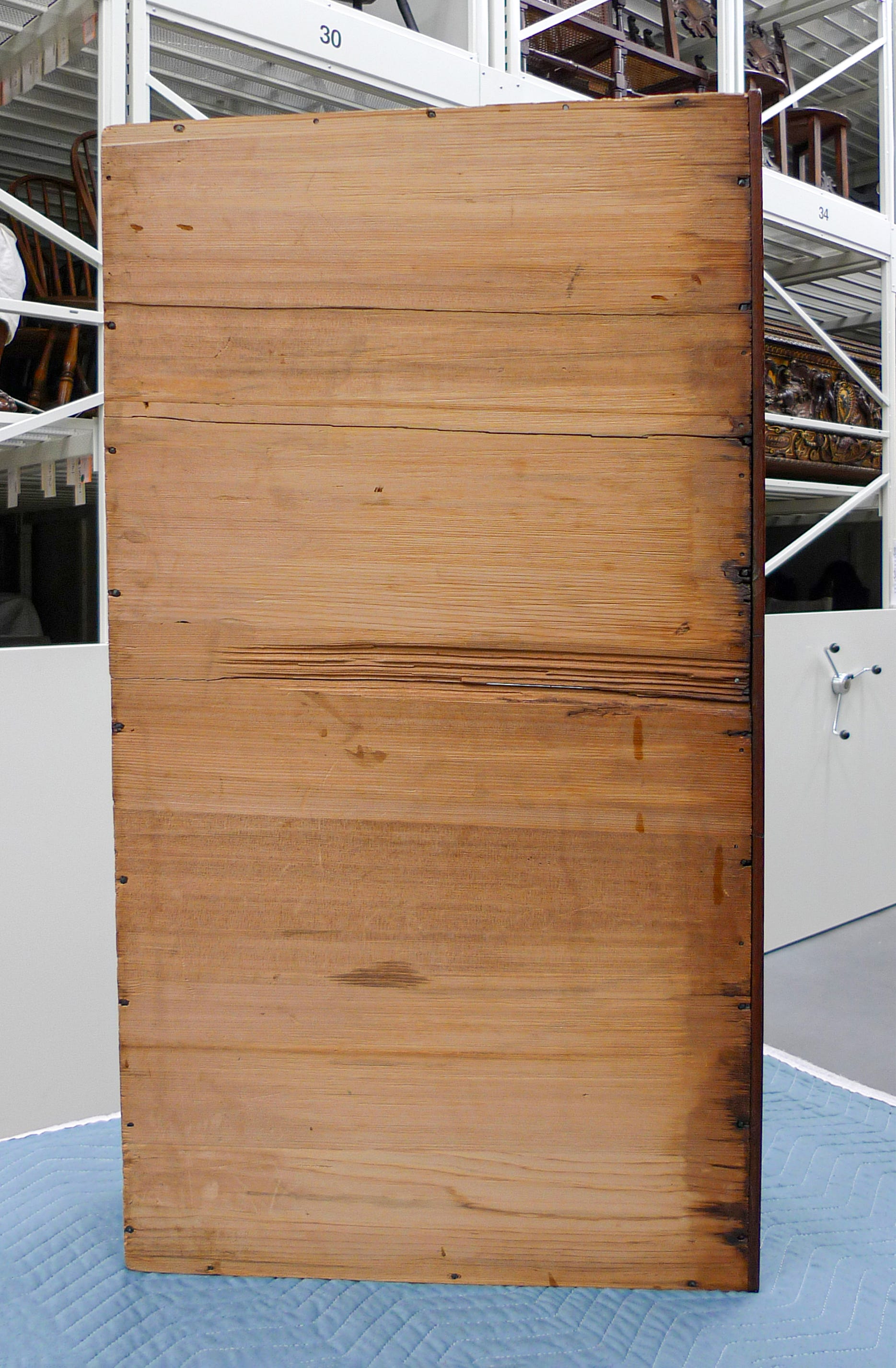
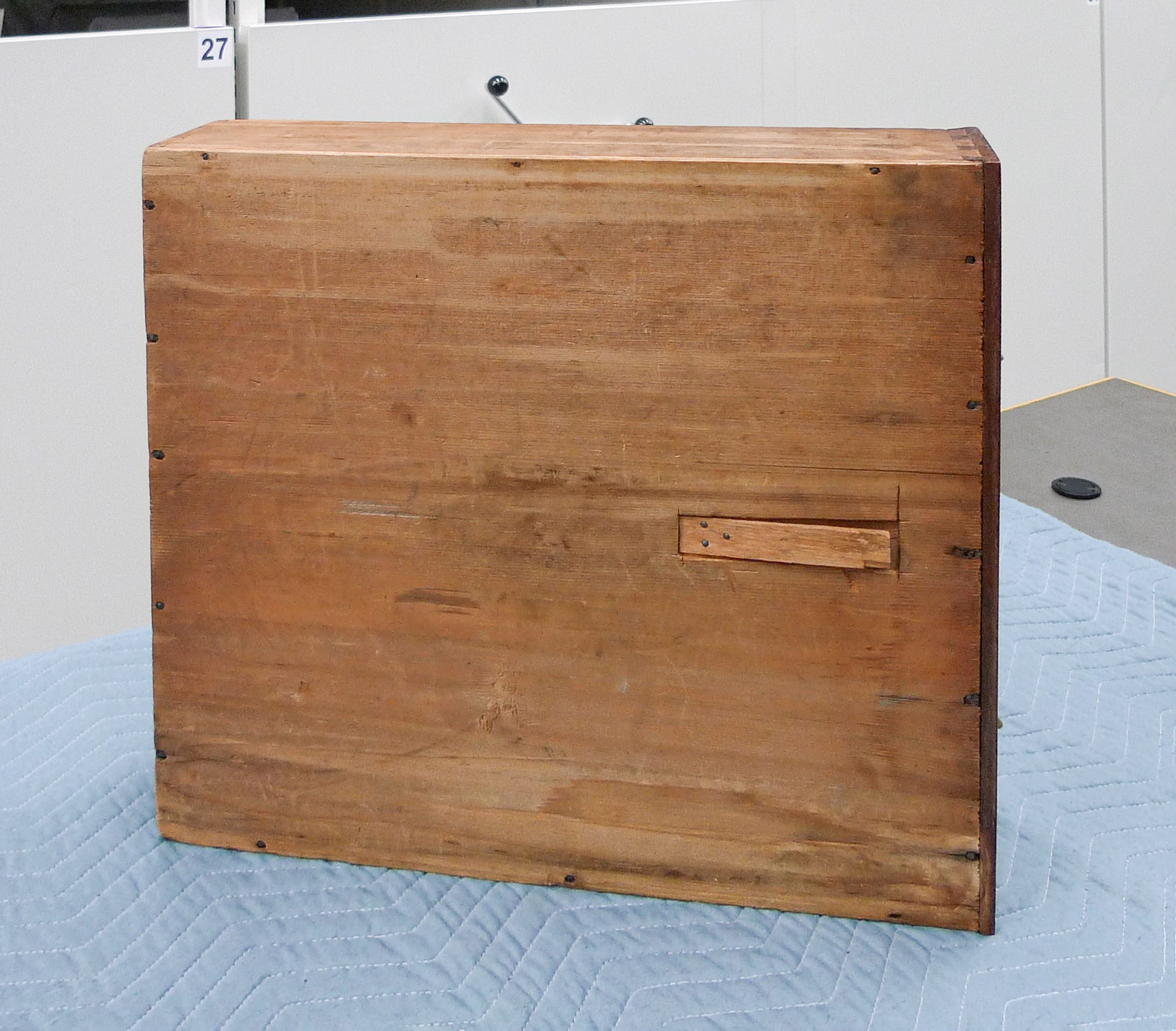
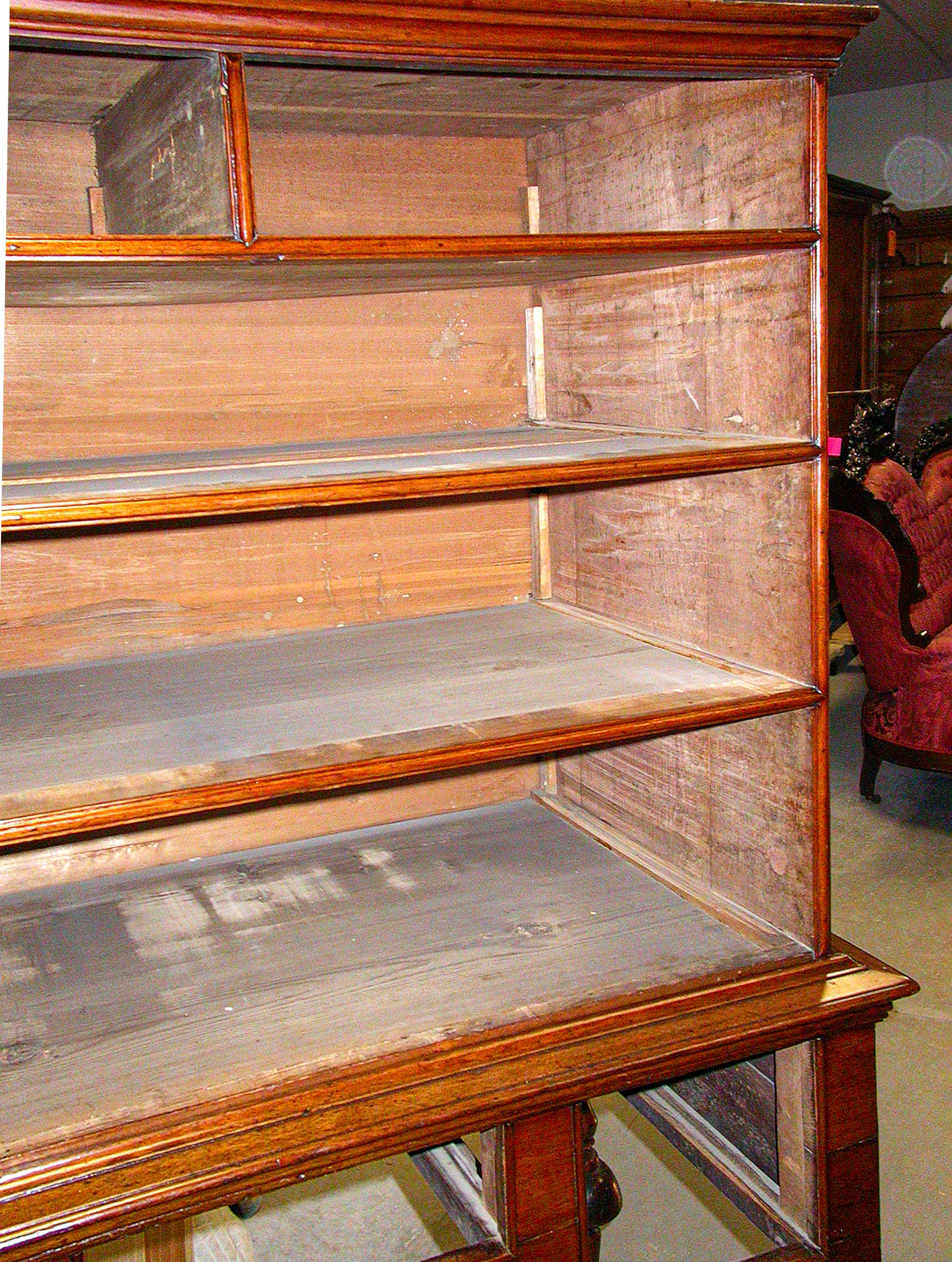
All the drawers of the chest are a simple first-phase construction, the sides are lap-dovetailed to the fronts and through-dovetailed to the backs. The flush, riven cedar bottom boards are nailed to a rebate in the drawer front and to the sides and backs. The two short-drawers in the upper-case have wood spring locks installed, as seen in fig. 5.
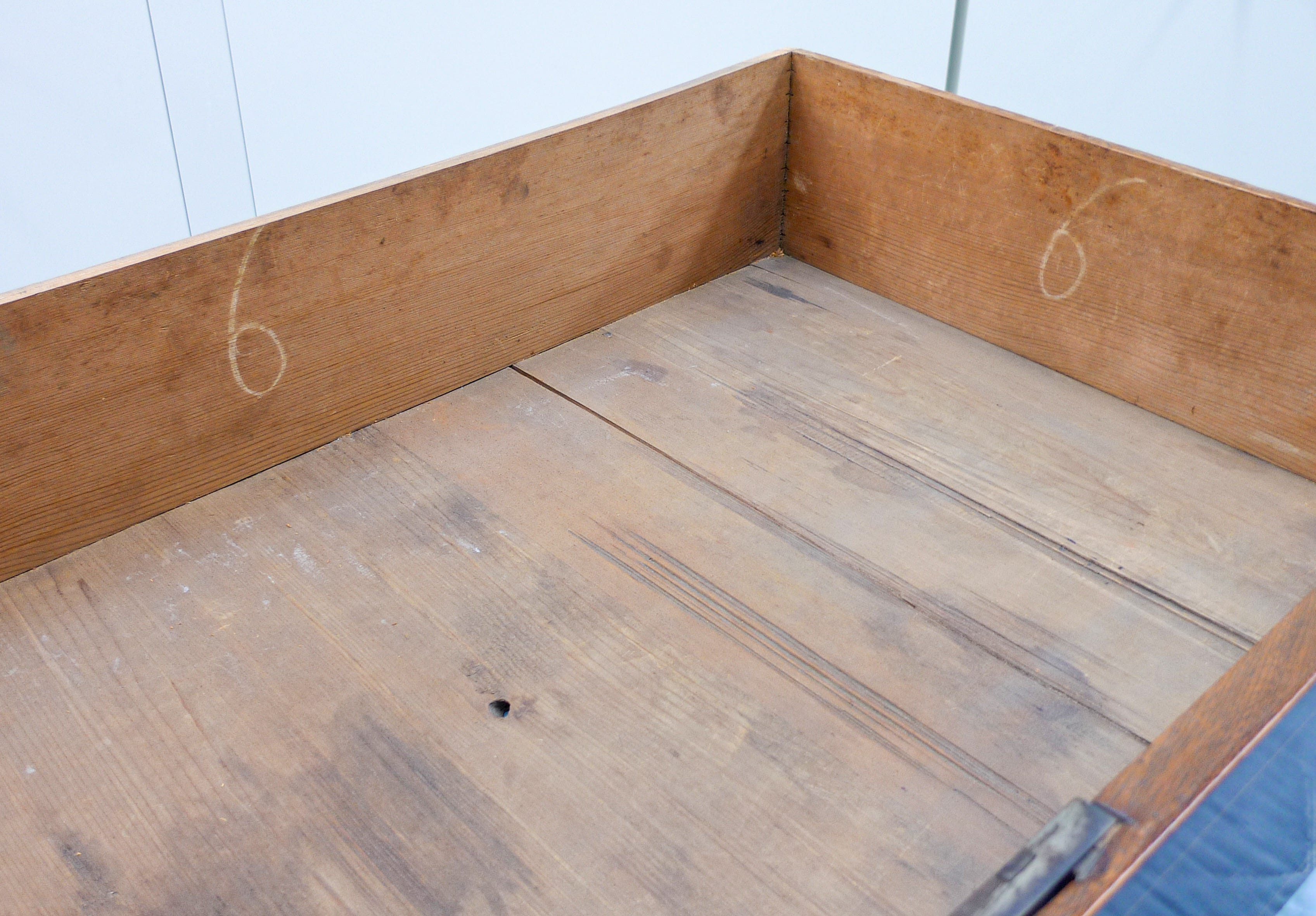
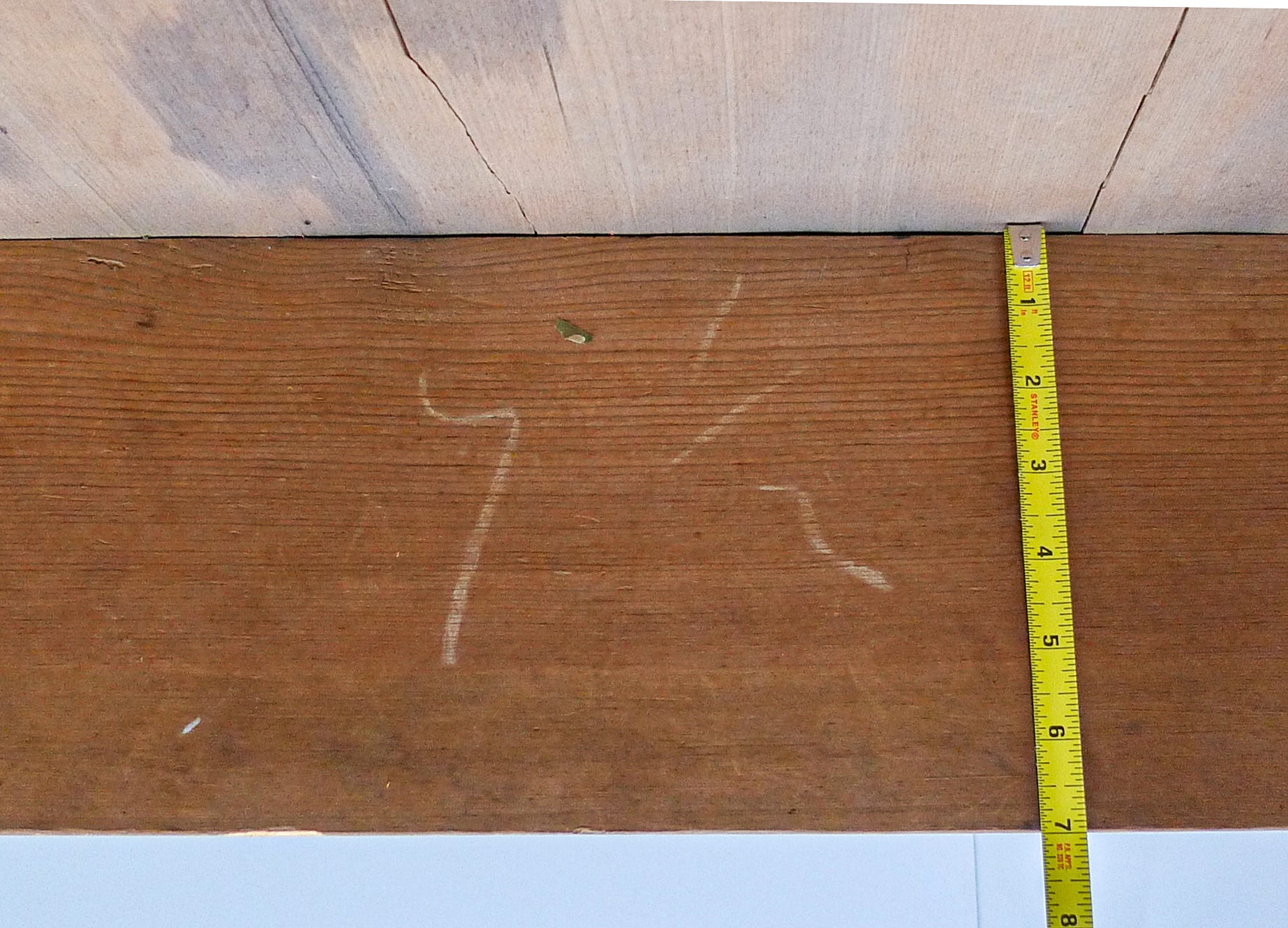
One unusual feature of this chest is the numerals added to the interior surfaces of the drawer sides and backs indicating the height of the drawer openings. For the drawer in fig. 7, the height of the drawer back (or sides), added to the thickness of the bottom, and the distance from the tops of the sides to the top of the drawer front is seven and a half inches.
The numerals on the drawers, while atypical and rarely seen, are not, however, the brilliant solution of the title of this article. The joiners of this chest solved the problem of binding and friction created by flush bottoms of drawers riding on full dustboards in their own unique way.
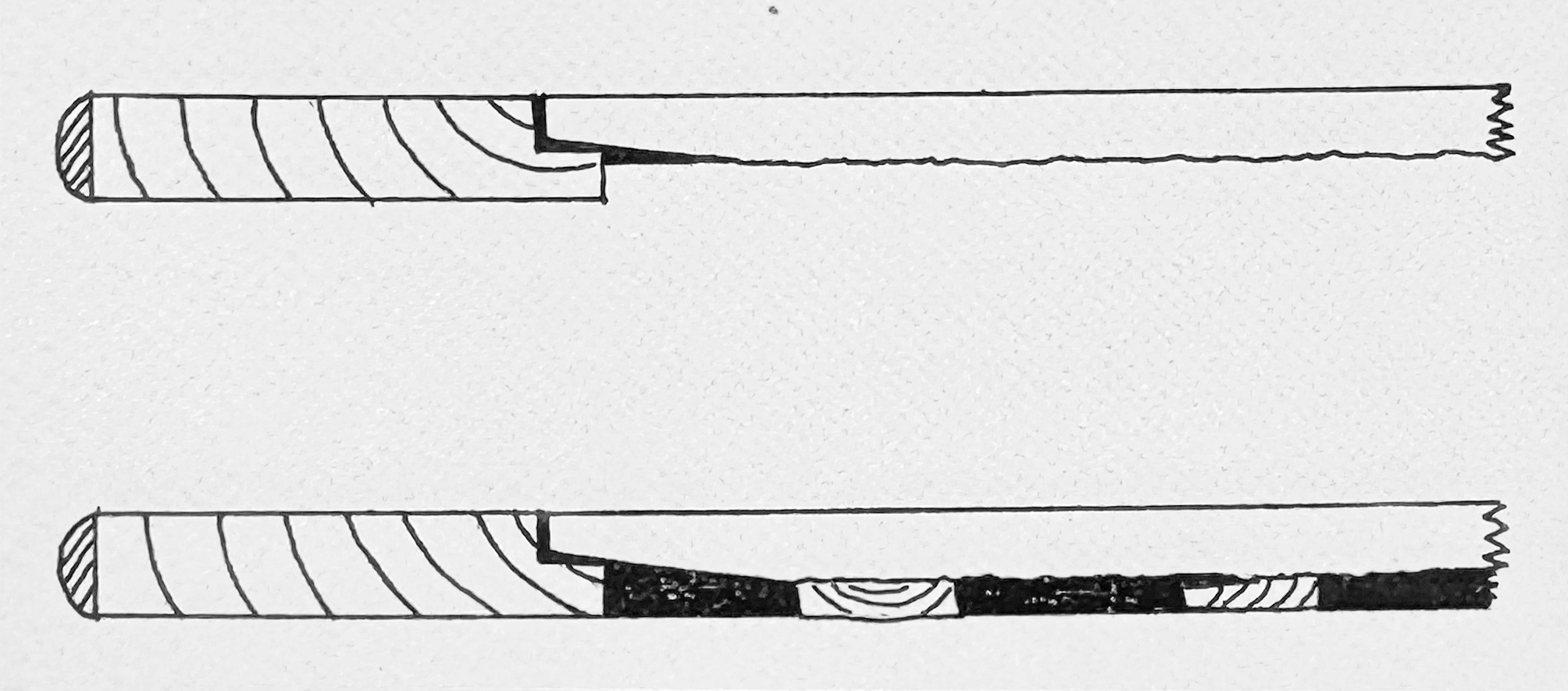
Adam Bowett describes a technological development in drawer construction at the beginning of the eighteenth century, whereby the bottom board was raised and runners were applied at the sides preventing drawers binding and reducing friction. This allowed the dustboards to be made thinner, as the weight of the drawers was now transferred to the sides. Fig. 7 illustrates two ways this was done. At the top, a dado the same thickness of the dustboard is plowed in the side and enlarged at the front of the carcase for the rail. Below, a dado the same size as the rail is plowed and the dustboard is secured with wedges. The dustboard remains flush with the top of the rail.
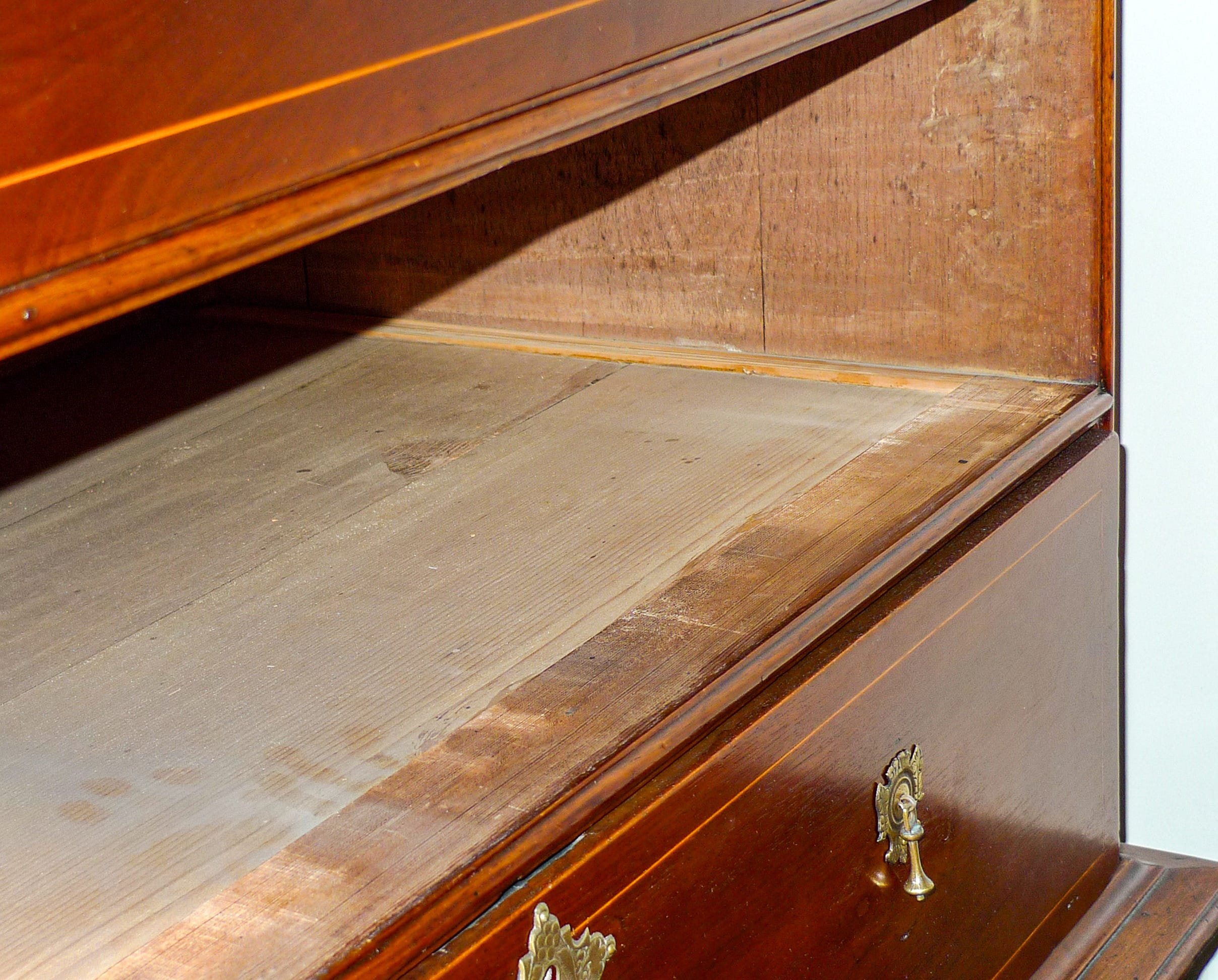
The joiner of this chest had the brilliant idea that allowed him to reduce friction but continue to make his drawers with flush nailed on bottoms by plowing the dado at the bottom of the dustboard, not the top, with runners added to the top of the dustboard, flush with the top of the rail. Fig. 7 illustrates how the dustboard sits below the rail and a runner is glued to it at the side.
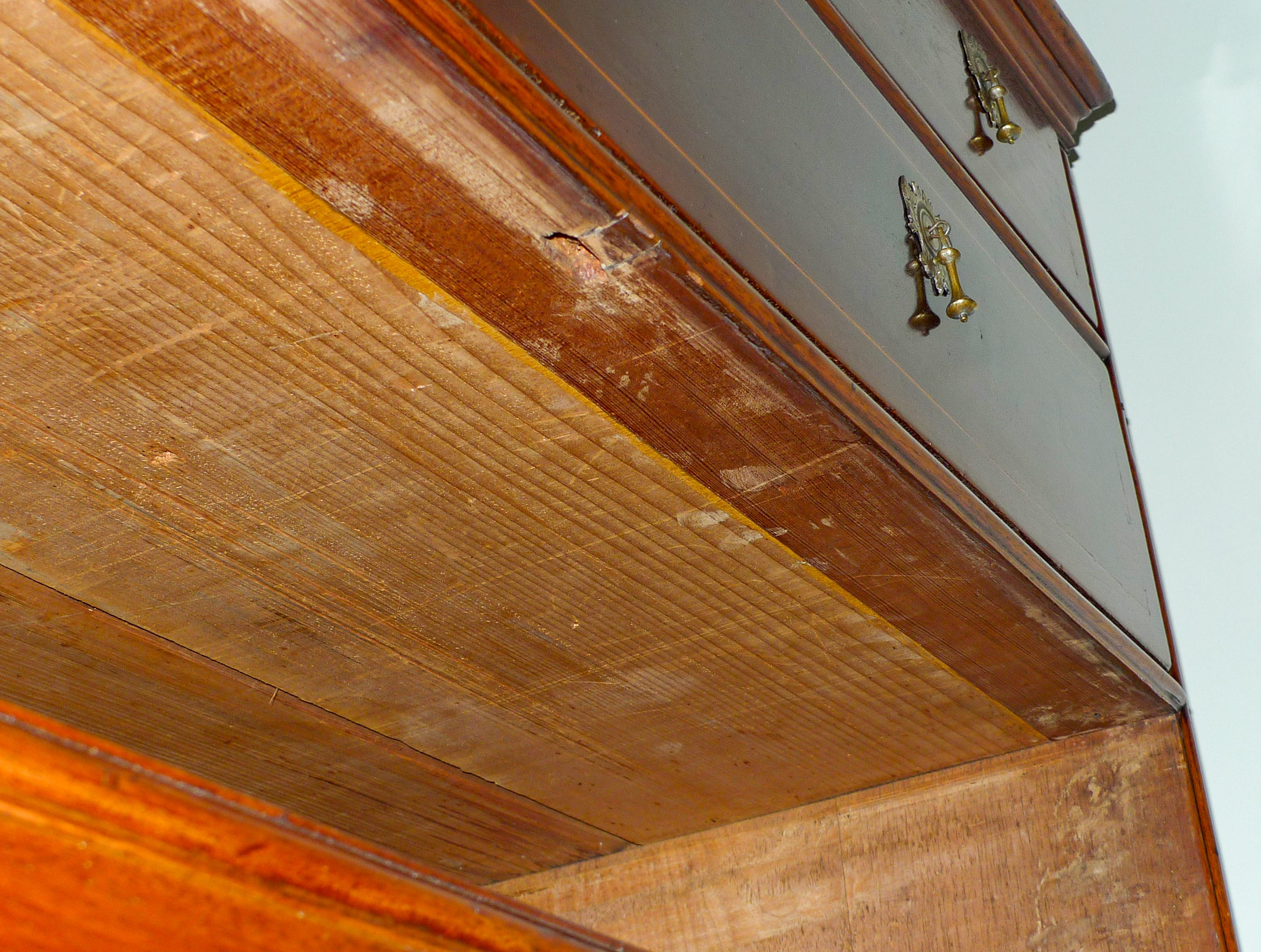
Fig. 8 is a view of the dustboard and rail from below. The bottom of the rail and the dustboard are flush.
This construction variant is not mentioned in either Adam Bowett, English Furniture, 1660-1714, From Charles II to Queen Anne. Antique Collectors’ Club, 2002, or Adam Bowett, Early Georgian Furniture, 1715-1740. Antique Collectors’ Club, 2009. I have not seen this technique described elsewhere and have not seen another chest that employs it. Can it be that this technique was developed in a single shop and passed into history with the next advance in carcase and drawer construction in the mid-1730s?
https://whyy.org/articles/9300/
The earliest dated inlaid Philadelphia furniture is a chest of drawers with line and dot inlay and the initials “IB” and the date 1706 inlaid on the top. See: Margaret Berwind Schiffer. The Furniture and Makers of Chester County. Philadelphia: University of Pennsylvania Press, 1966,
Adam Bowett, Early Georgian Furniture, 1715-1740. Antique Collectors’ Club, 2009, pp. 114-115.
Dear Chris,
Thank you for apprising us of the idiosyncratic method of construction adopted by the shop that made this high chest.
The leg turnings on the high chest remind me of those on two Philadelphia dressing tables, one at the Philadelphia Museum of Art and the other sold at Christie's that was once owned by Dr. and Mrs. Donald A. Shelley: https://www.christies.com/en/lot/lot-5401638/. Do either of those tables share any similarities of construction with the high chest?
Thanks,
Jay