
A Windsor Stand
And Two "Not Windsor" Tables

Over his lifetime, H. Richard Dietrich Jr (1938–2007) assembled an extensive and diverse collection of American art and artifacts. Dietrich began to collect in earnest after he established a nonprofit institution—The Dietrich American Foundation—in 1963. Books and manuscripts were his first focus, but his collecting expanded to include American furniture, Pennsylvania German fraktur, silver, Chinese export porcelain, whale-trade objects, and paintings. Dietrich purchased his first examples of American Windsor seating furniture in 1966. Through the following twenty-two years, Dietrich created a small but carefully chosen and notable grouping of American Windsor furniture, creating a significant subset of objects in the Foundation’s American furniture collection. While all the Windsor seating furniture Dietrich collected was ultimately bequeathed to the Foundation at the time of his death, for many years they would remain in his personal collection as part of the furnishings of his home.
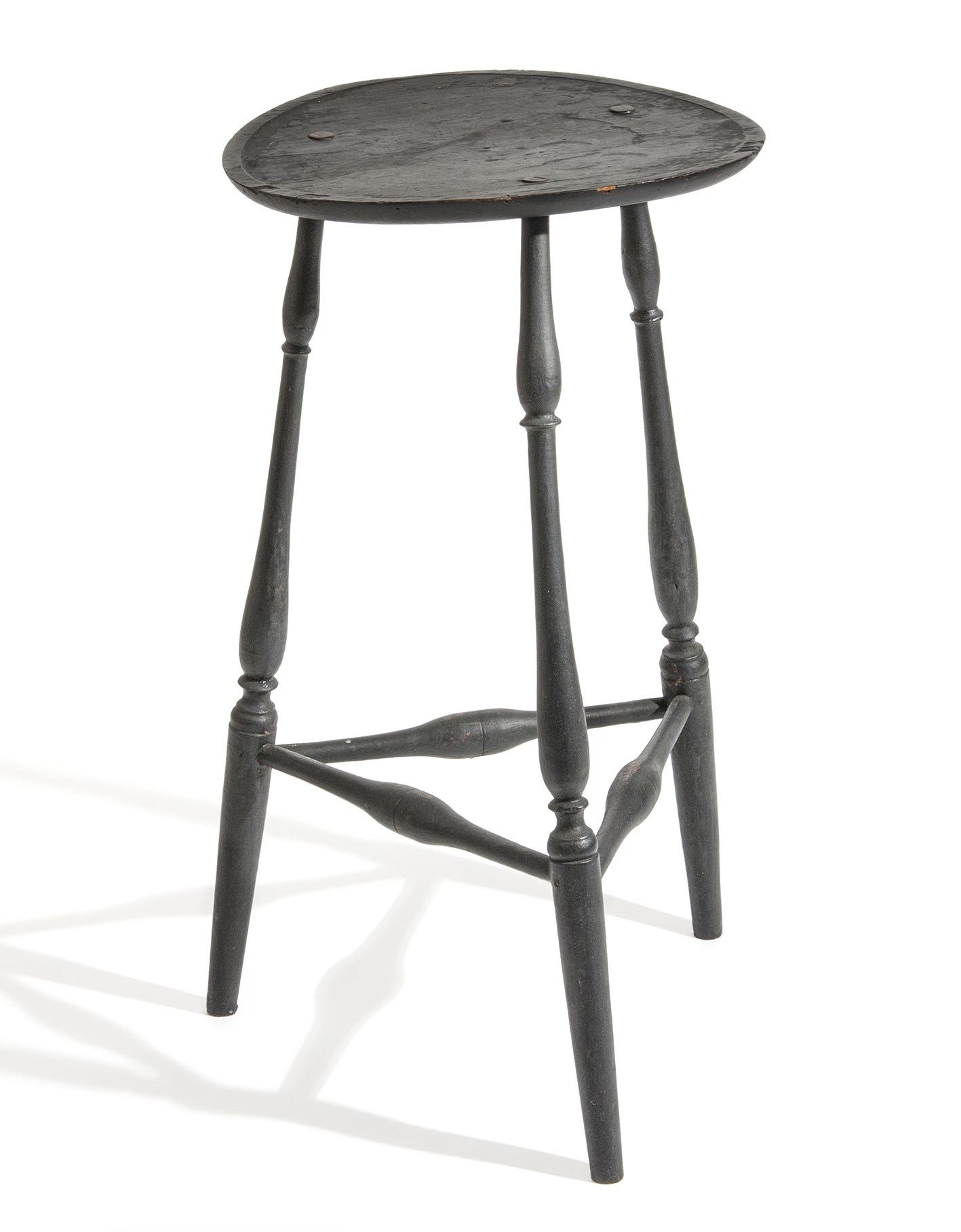
Dietrich purchased the Windsor stand in fig. 1 from a Massachusetts dealer in 1970. It is not known whether at that time Dietrich understood the great rarity of Windsor stands or that surviving stands were almost exclusively produced in Southeastern Pennsylvania, though he may have been familiar with a closely related example illustrated in Antiques, October 1924.1 The Dietrich Windsor stand has been on loan to the Burlington County Historical Society, Burlington, New Jersey, since 1977.
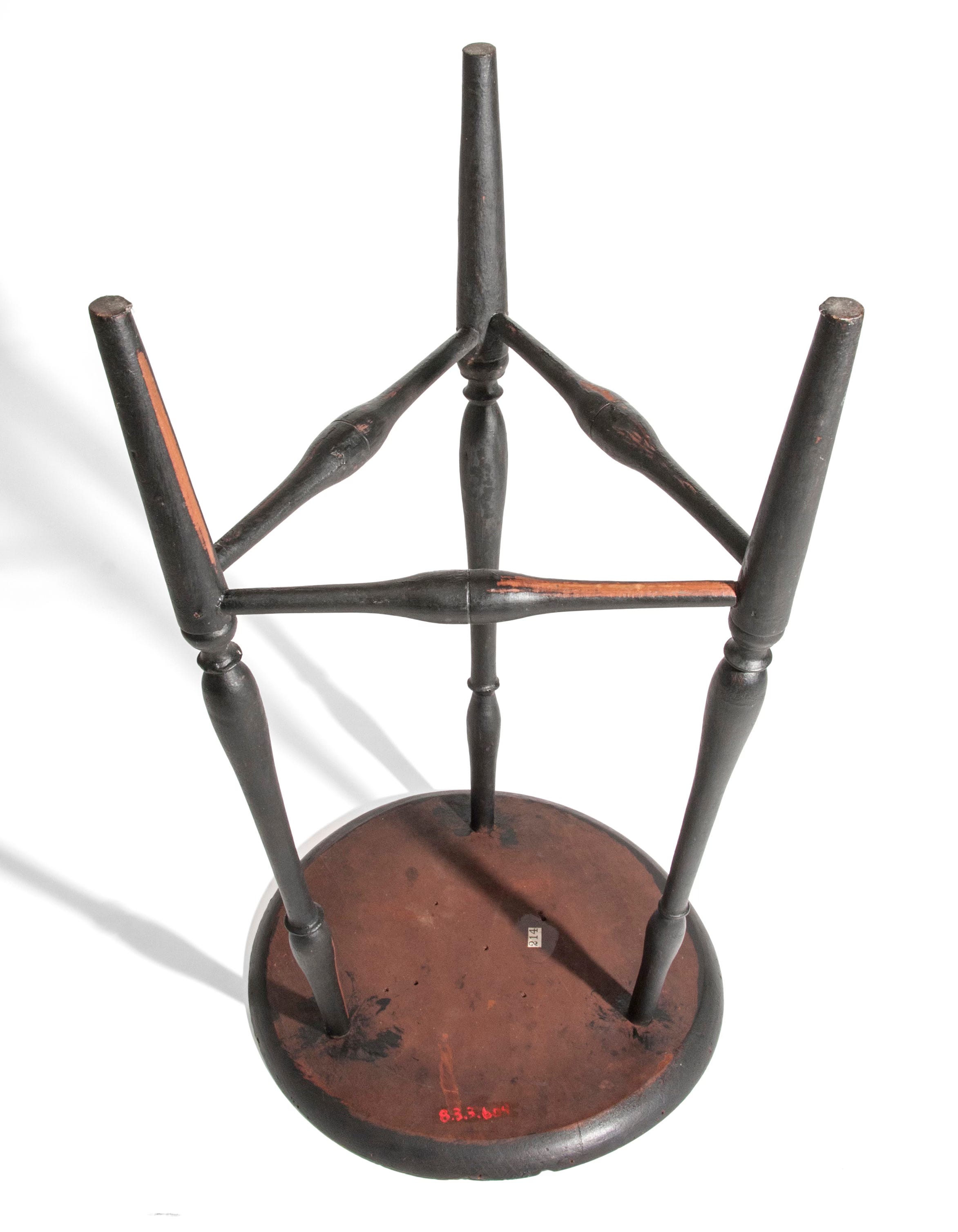
The Windsor stand is constructed in true Windsor fashion with legs that are socketed through the top and wedged. There is a red semi-opaque wash over the entire stand including the lower surface of the top. On top of the red is a black coating with a craquelure texture. These opaque painted surfaces do not allow an identification by eye for the wood species of the top. It appears to be a diffuse porous wood, possibly yellow poplar.
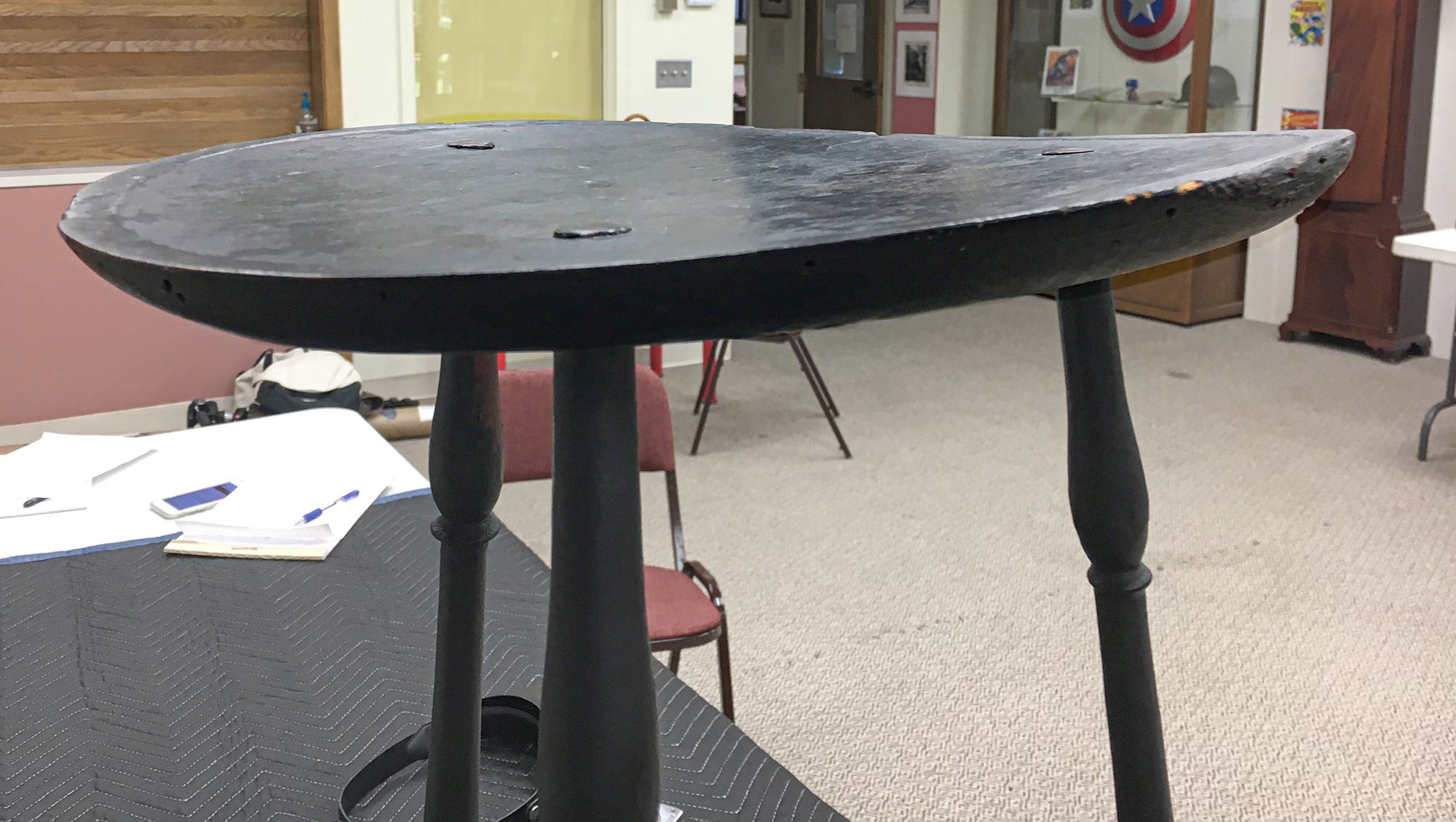
The top was turned on a lathe to create the subtle moulded rim and rounded edge. The top had a relatively high moisture content when the table was assembled and shows significant distortion. It has shrunk 3/4 of an inch across the grain even though the top was only 15 1/4 inches in diameter when the table was assembled.
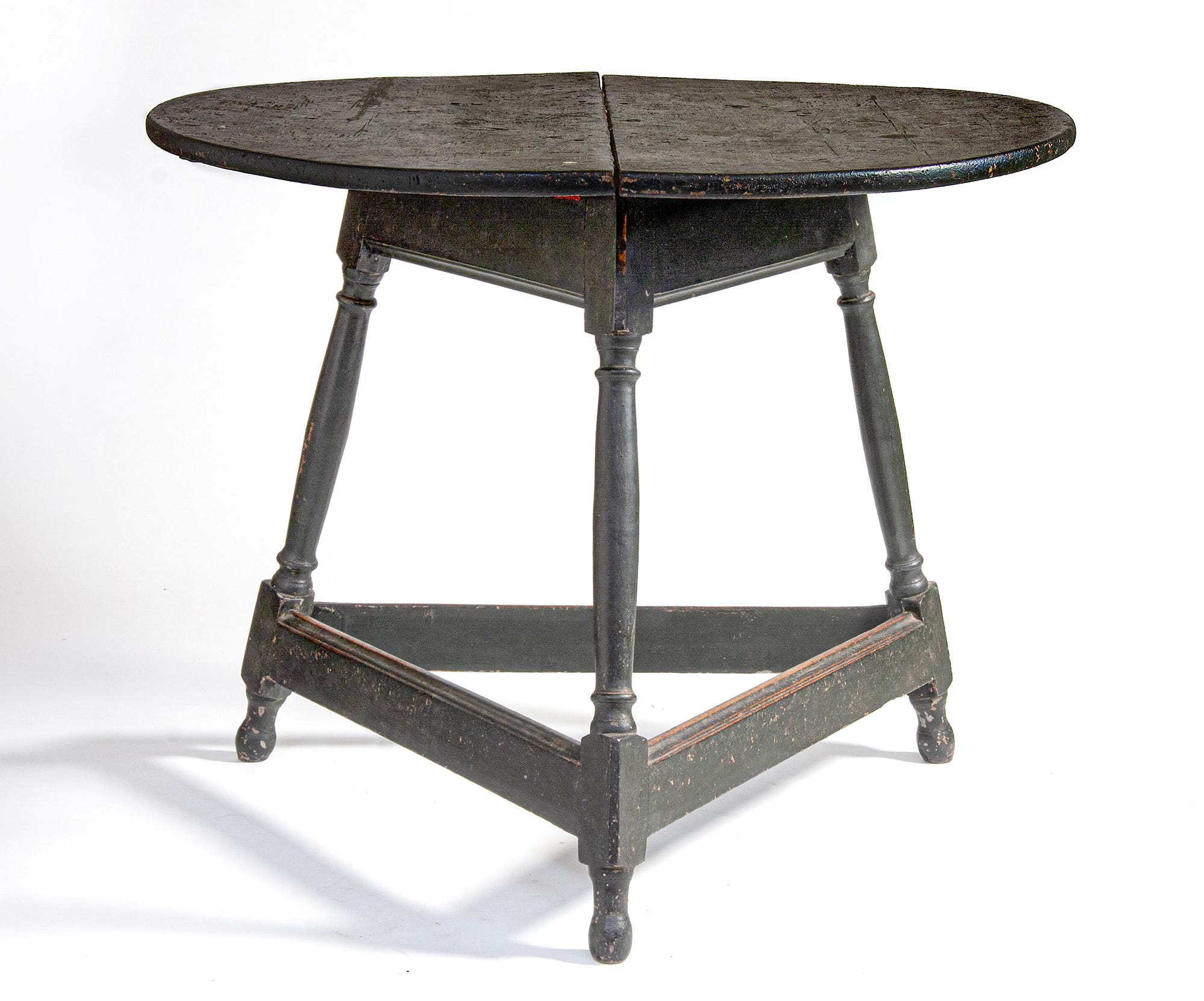
In addition to the Windsor stand in fig. 1, Dietrich also collected two Southeastern Pennsylvania tables with turned baluster-style legs, ball feet, and upper and lower rails tenoned and pegged to the legs. The tops of this type of table were attached to the base with pegs or nails driven from the top into the upper rails, or, on the largest tables, into a cleat notched through two of the rails attached to the top with pegs. The table in fig. 4 was purchased at the Pennypacker Auction Centre, Reading, Pennsylvania, May 26th, 1969, lot 326, another early acquisition. The original green paint survives under later varnish coats.
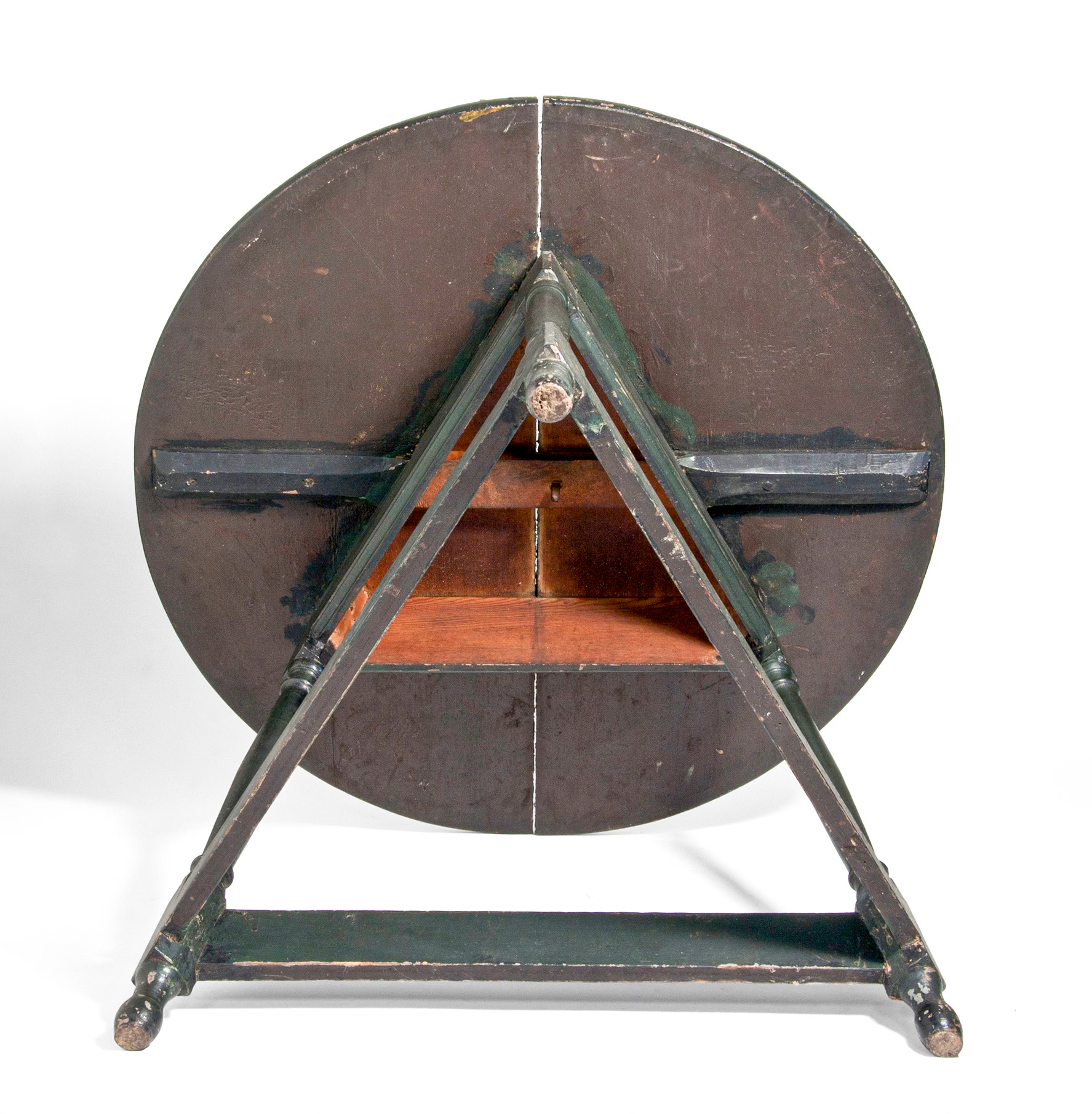
The top of the table in fig. 4 has been microscopically identified as Eastern white pine. The legs, lower rails, two of upper rails, and the cleat are maple, the third upper rail is hard pine. The cleat, nearly the length of the top, fits in notches in two of the upper rails. Five pegs attach the two-board, white pine top to the cleat. Two pegs are driven through the top into each upper rail. The underside edge of the top is slightly chamfered to a scribed line 7/8 of an inch from the edge.
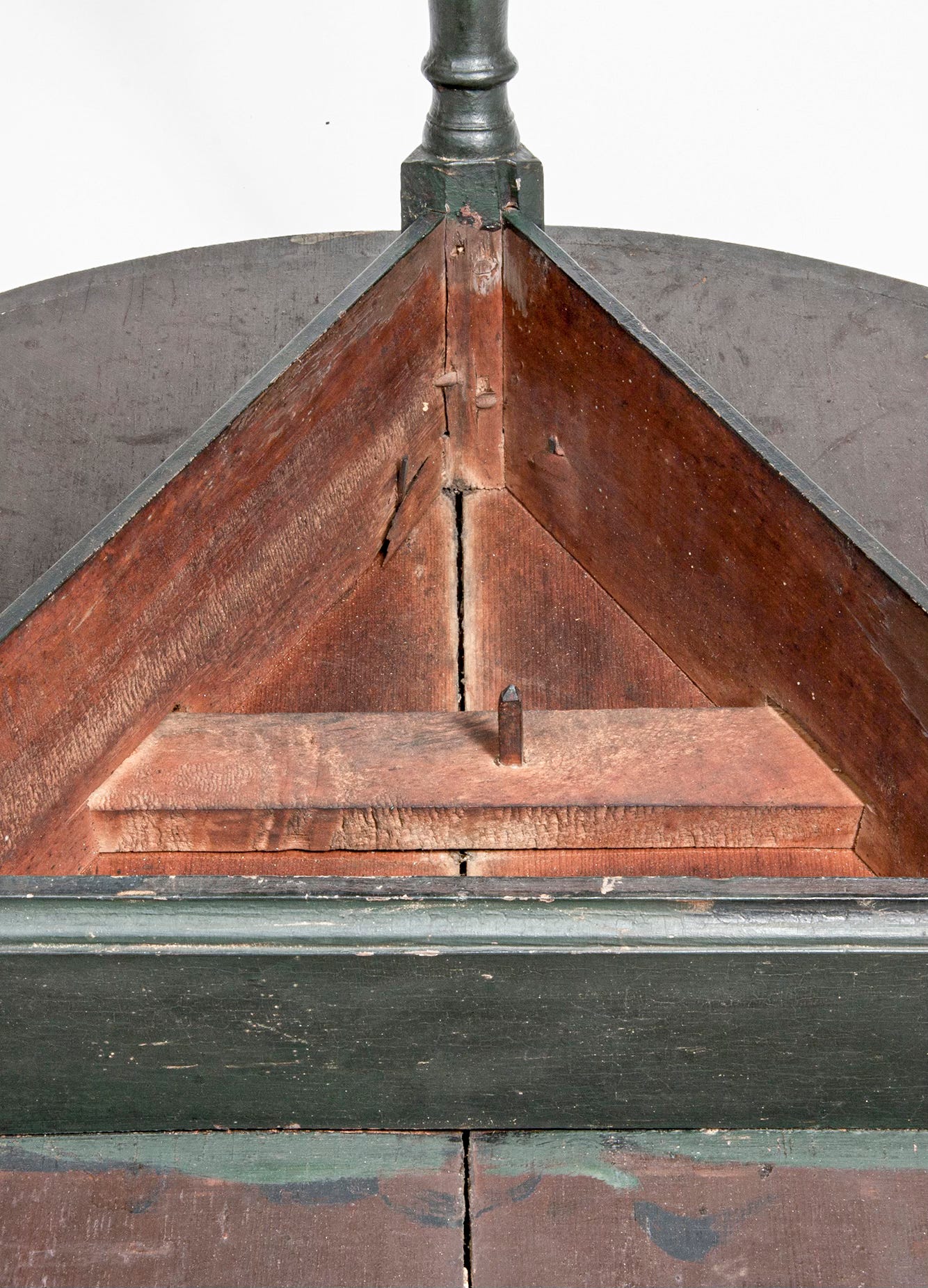
The pegs through the cleat are trimmed where the knees of a person sitting at the table would come in contact with them. The single peg inside the upper rails is left untrimmed. The peg is perfectly square and neatly chamfered to a point.
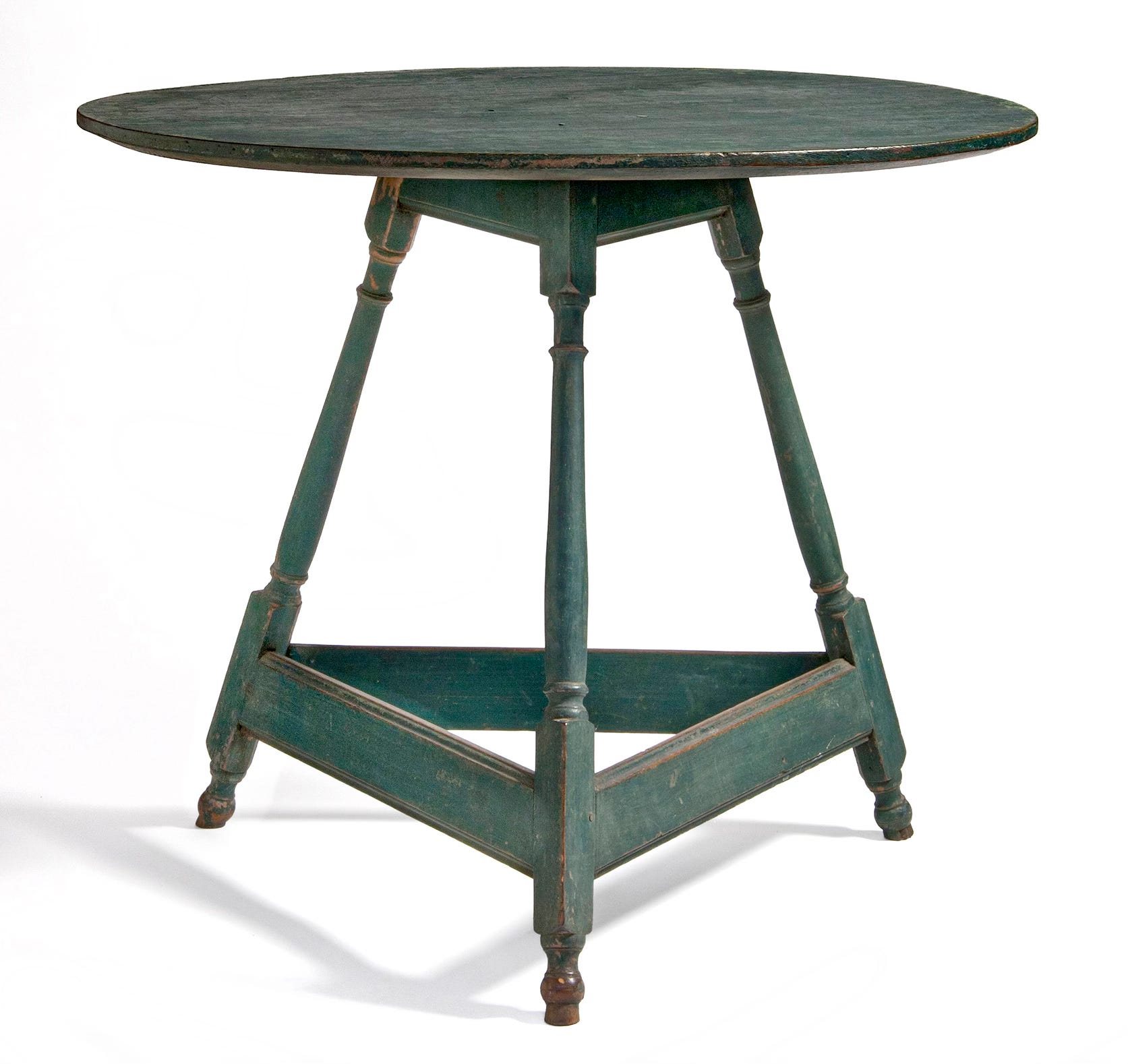
Almost 20 years separates the acquisition of the table in fig. 4 and the table in fig. 7, which was discovered in a dealers booth at the 1988 Philadelphia Antiques Show. Its excellent condition, including an original surface consisting of green paint over a light blue primer coat, under a later green paint, might alone have persuaded Dietrich to pursue the table, but I suspect the fact that the top is oval, not the common round or square shape, would ultimately have convinced Dietrich to add the table to his collection.
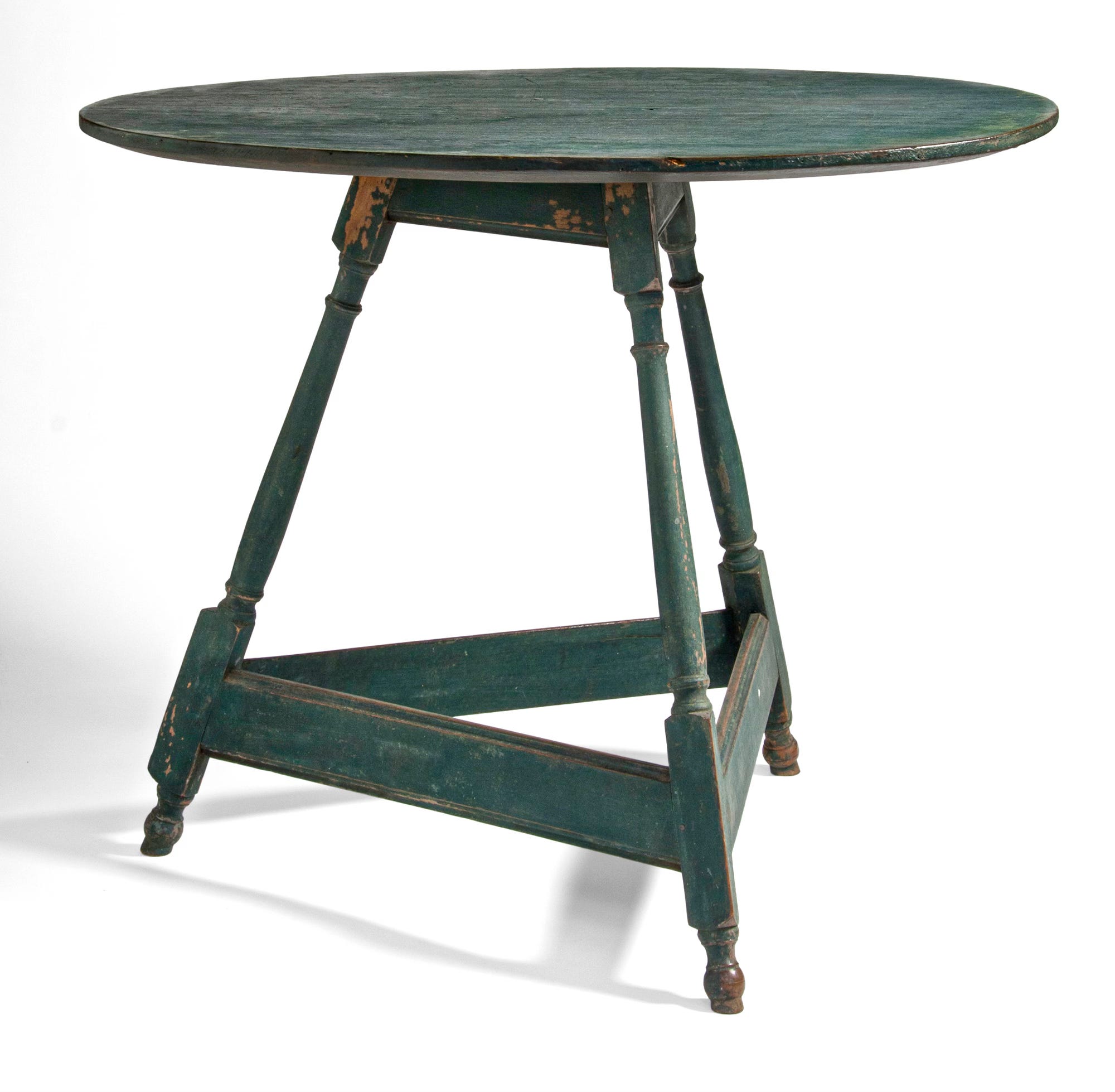
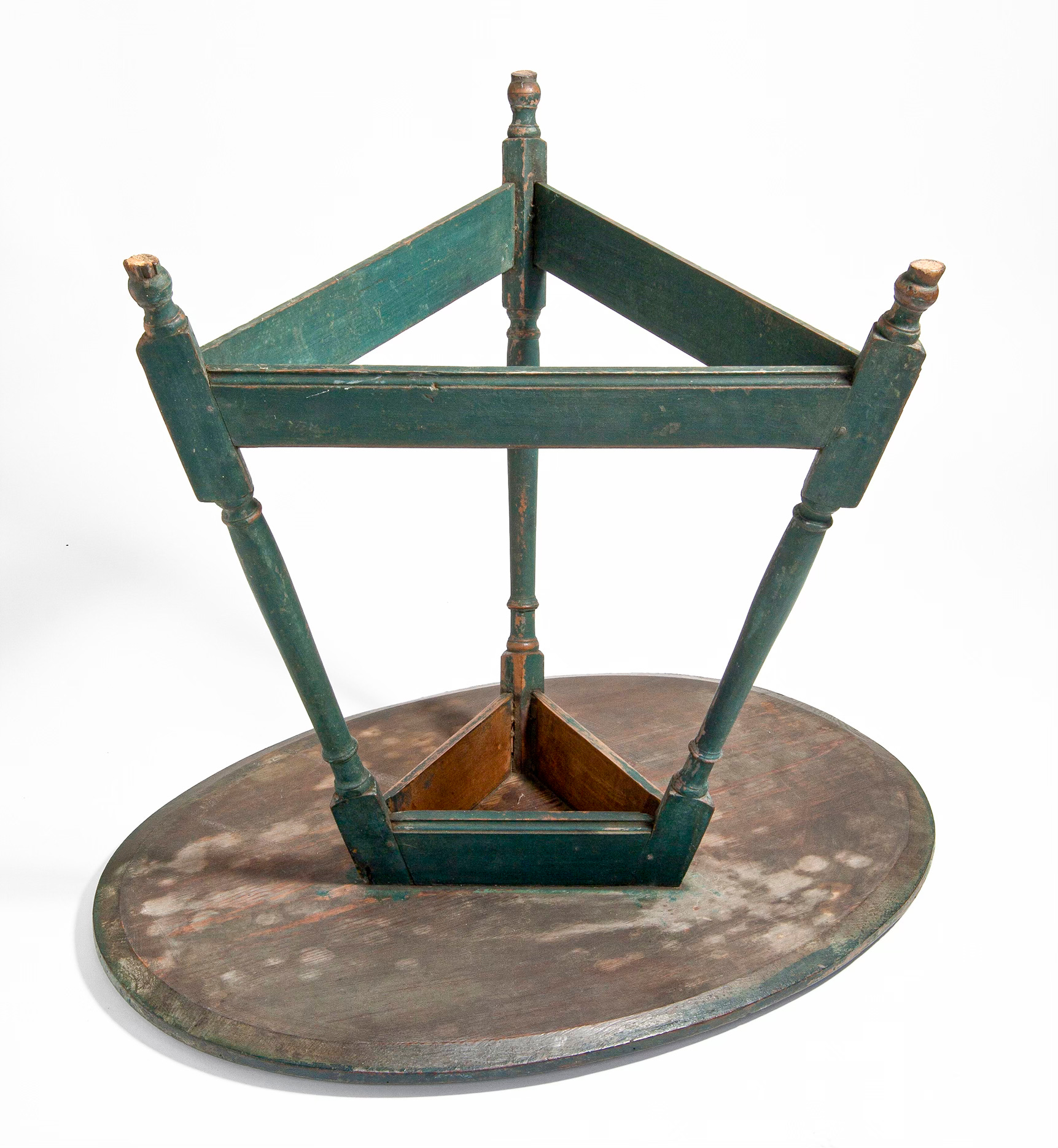
The single-board hard pine top is heavily chamfered on the bottom edge and is attached to the base with a single peg in each rail. There is no cleat.
The tables in figs. 4 and 7 are not technically Windsor furniture as the legs are not socketed to the the top (or seat as in a Windsor chair) and they employ mortise and tenon joinery in the stretcher-to-leg joints rather than turned stretchers with round tenons fit to holes bored in the legs. That said, who would have sat around these tables and what would that have sat on? What do these tables say about the chairs that would have been used around them? I think true Windsor side chairs would be right at home assembled around the tables, whether the tables are true Windsors or not.
One more question. The Windsor stand in fig. 1 was undoubtedly made by a Windsor chair maker. Though I’ve dated it after the Revolution, it’s possible it was made earlier. Any Windsor chair maker could easily have produced it with much less effort than making a side chair. Drafting the delicate design of the legs, twenty-five inches tall versus sixteen inches of a side chair leg, but with the same diameter, would be a challenge, but that had been accomplished by Philadelphia Windsor chair makers who elongated the leg designs of side chairs for their high-chair Windsors.
But who made the “Windsor adjacent” tables? Did Windsor chair makers collaborate with joiners or did a cabinet-shop combine mortise and tenon joinery with legs purchased from turners to produce a large, stronger version of a true Windsor table at an economical price point compared to walnut or mahogany tilt-top tea tables?
Clarance W. Brazer. “Rare Windsor Candlestands.” Antiques, 30, no 4, October 1924, pp. 190. Henry F. duPont acquired the stand in 1926. It is now in the Winterthur collection. Only one surviving Windsor stand is attributed to a region outside of Southeastern Pennsylvania. See: Nancy Goyne Evans. American Windsor Furniture, Specialized Forms, Hudson Hills Press, New York, 1997, p. 212, fig. 3-31.