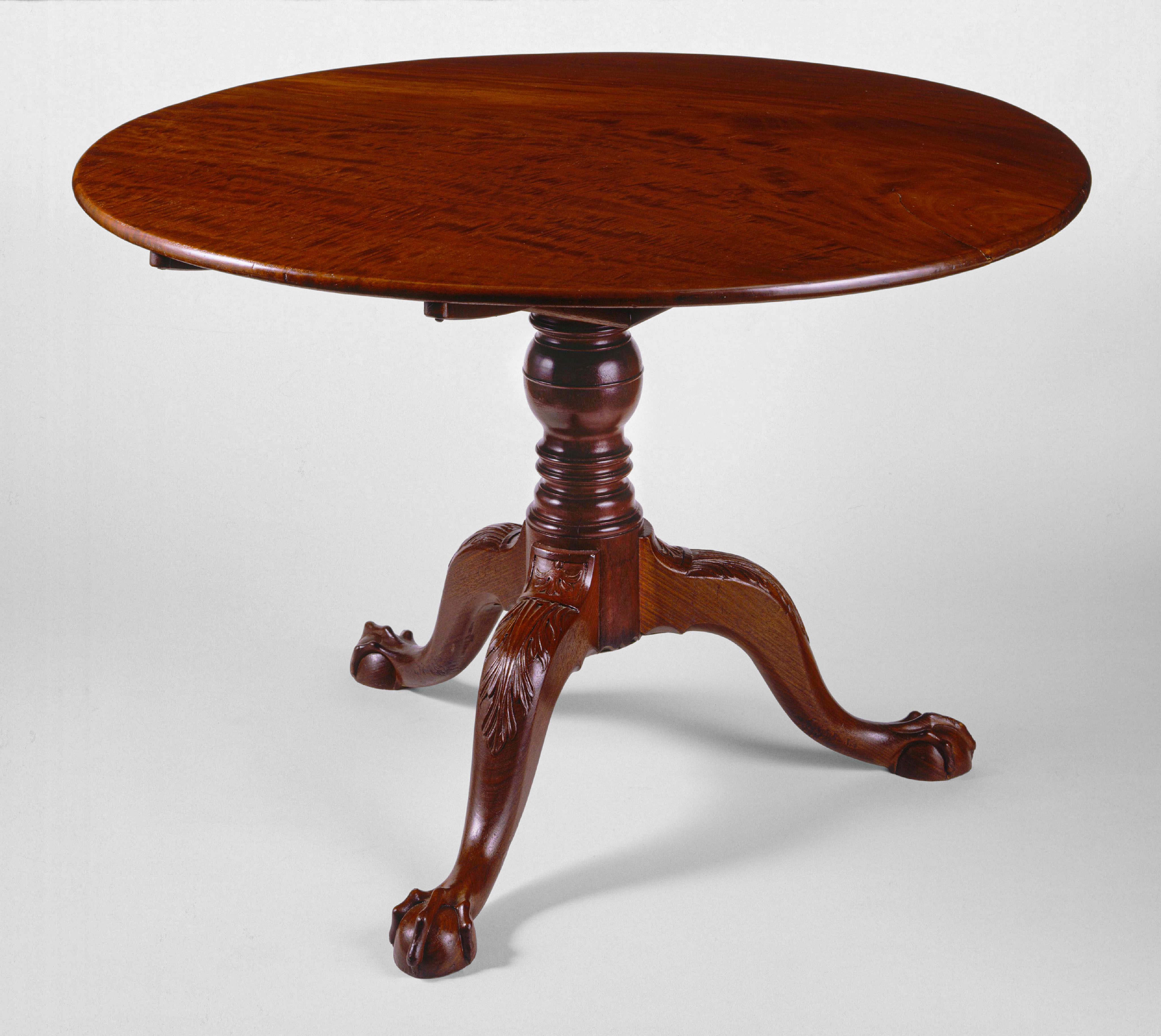
Fig. 1. Tea table. Philadelphia, circa 1755. Mahogany, maple, iron. OH. 29 1/4 inches; OW. 46 5/8 inches. Philadelphia Museum of Art.
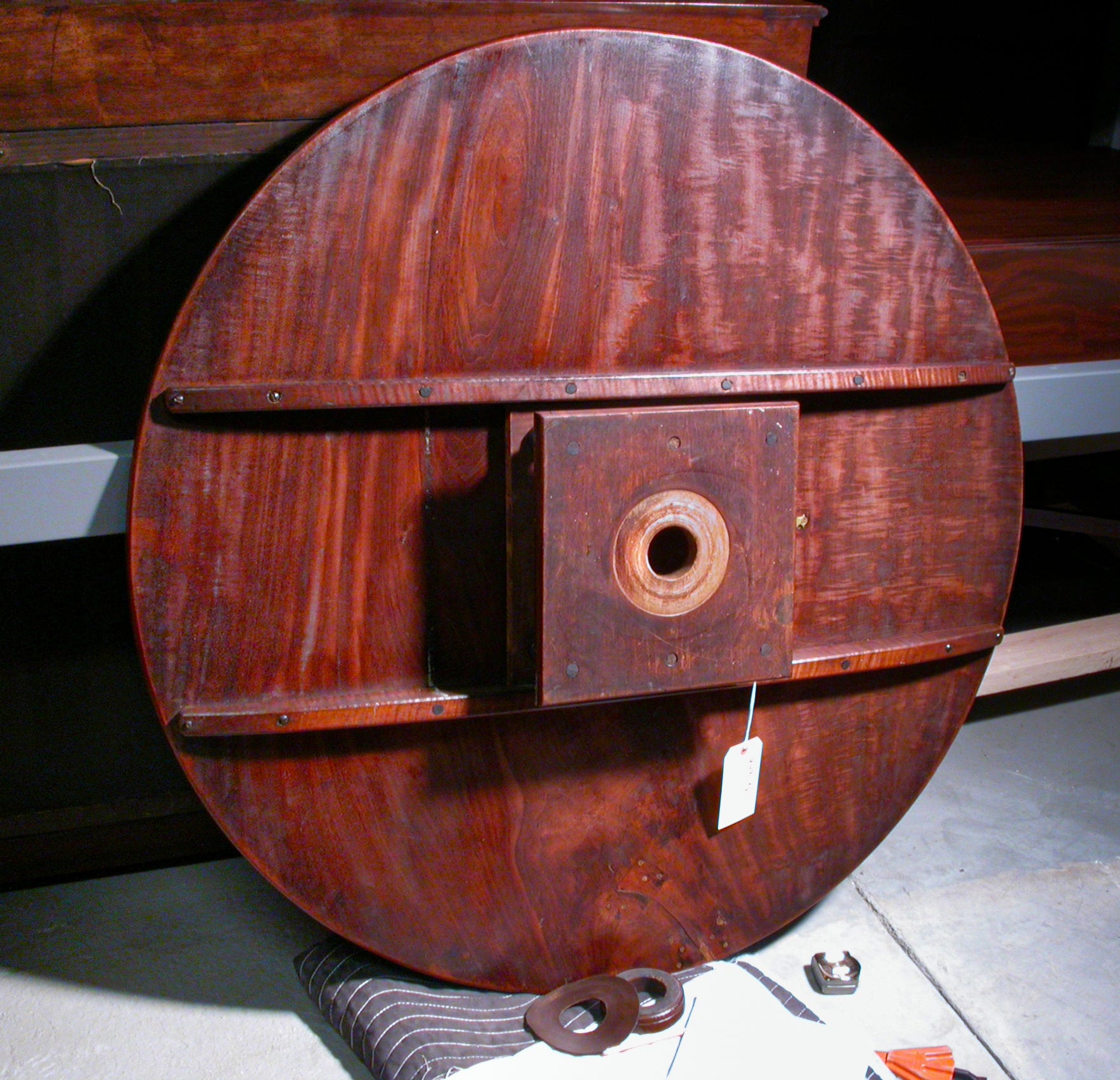
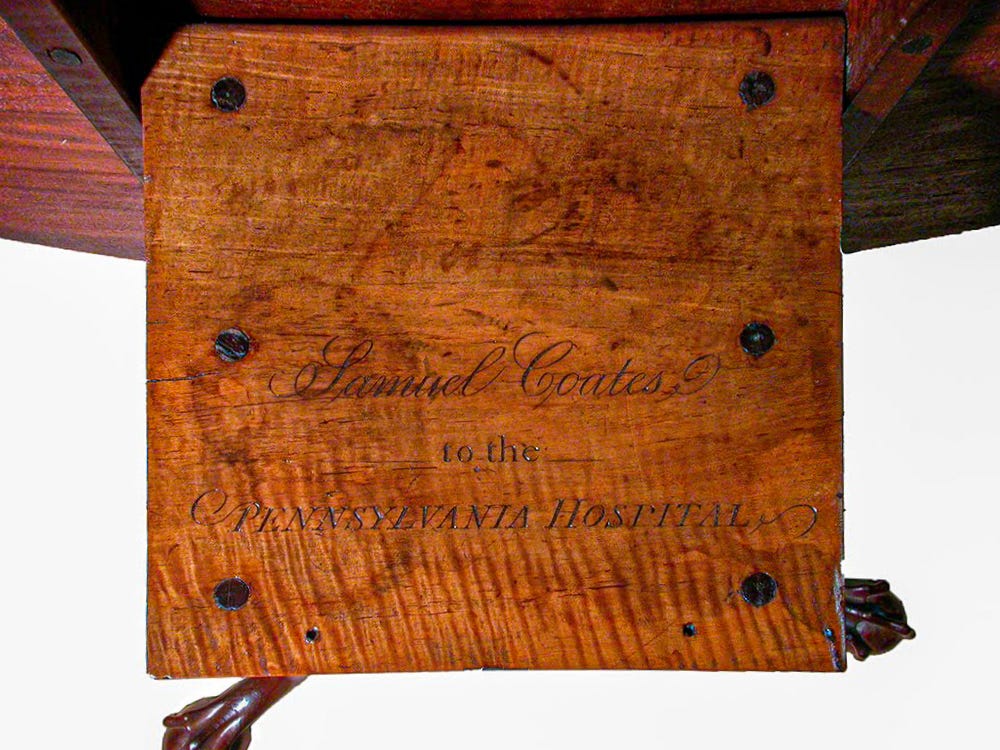
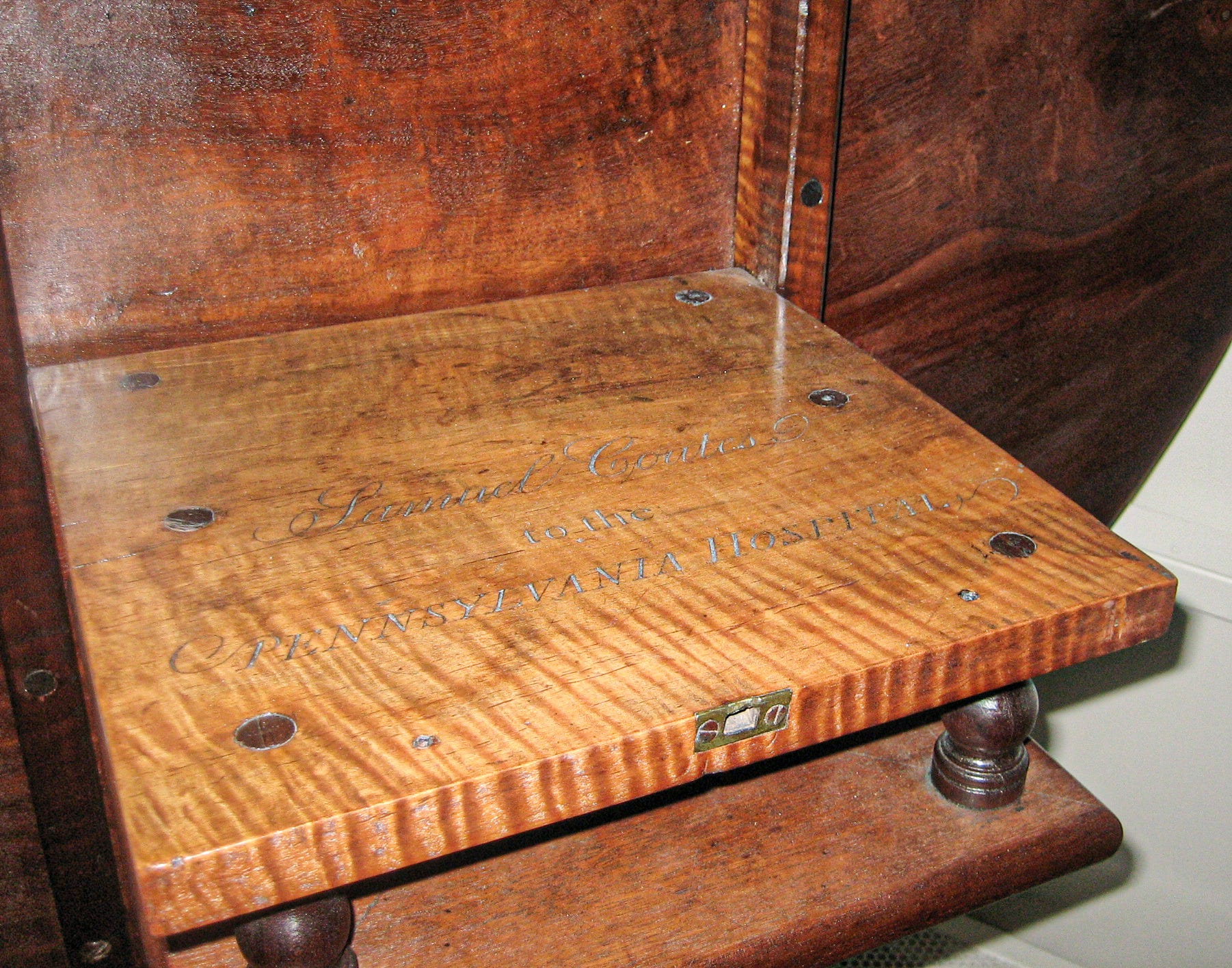
I’ve been very busy the past week and a half working on a number of projects and haven’t had the time I normally would to produce content here. But I wanted to put something up so this will be a post of mainly photographs of an object I suspect no one who subscribes to this Substack has seen in person even though it has been in a public institution since 1949, and maybe only a handful of you have ever seen photographic details. It is clearly a ceremonial object based on the, technically superior, carved inscription on top of the box and its massive top diameter of over 4 feet, perhaps the largest single mahogany board ever used in North American colonial furniture. I’ll add a few captions, enjoy the photo.
Fig. 2. Storb photo.
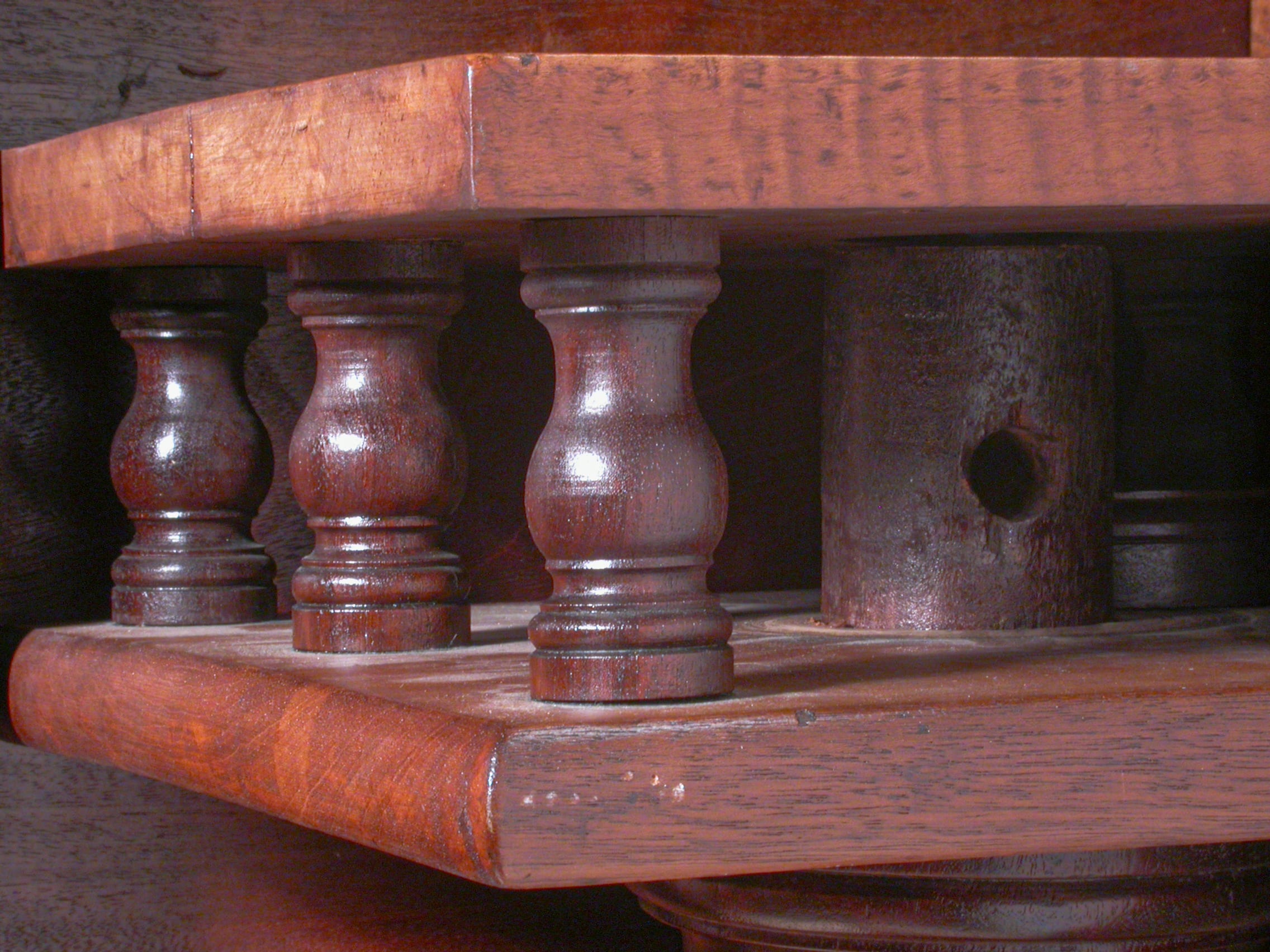
Fig. 3. The top plate of the box is striped maple as are the two cleats the top fits to that are screwed to the underside of the top. As the bottom plate and the six (not the typical four) balusters between the plates are mahogany, maple was probably used to produce more contrast with the carved lettering. Samuel Coates (1748-1830) was elected to the Board of Managers of Pennsylvania Hospital in 1785; he became the Board’s twelfth secretary (1786-1812)and ninth president (1812-1825). Coates remained in Philadelphia during the 1793 outbreak of yellow fever. Storb photo.
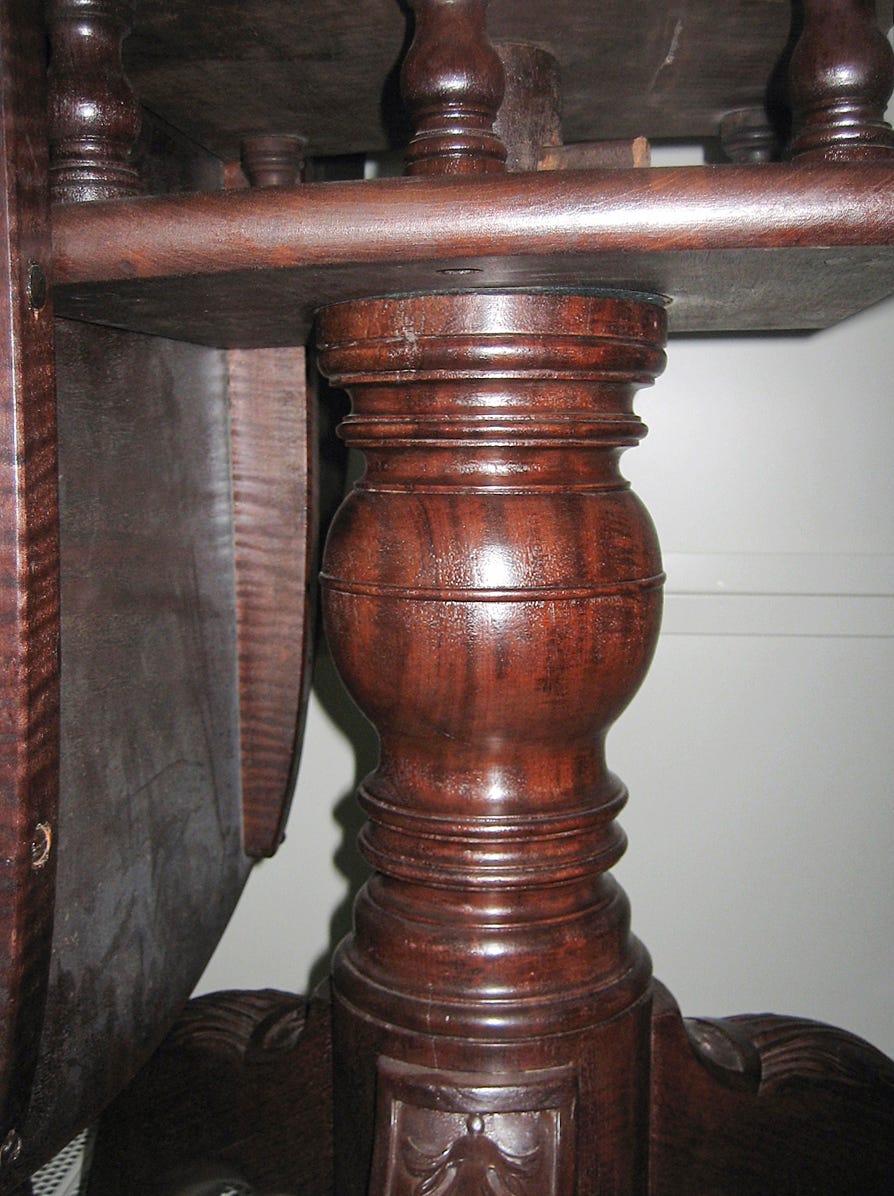
Fig. 4. Storb photo.
Fig. 5. Storb photo.
Fig. 6. Mahogany bottom plate and balusters. Storb photo.
Fig. 7. Storb photo.
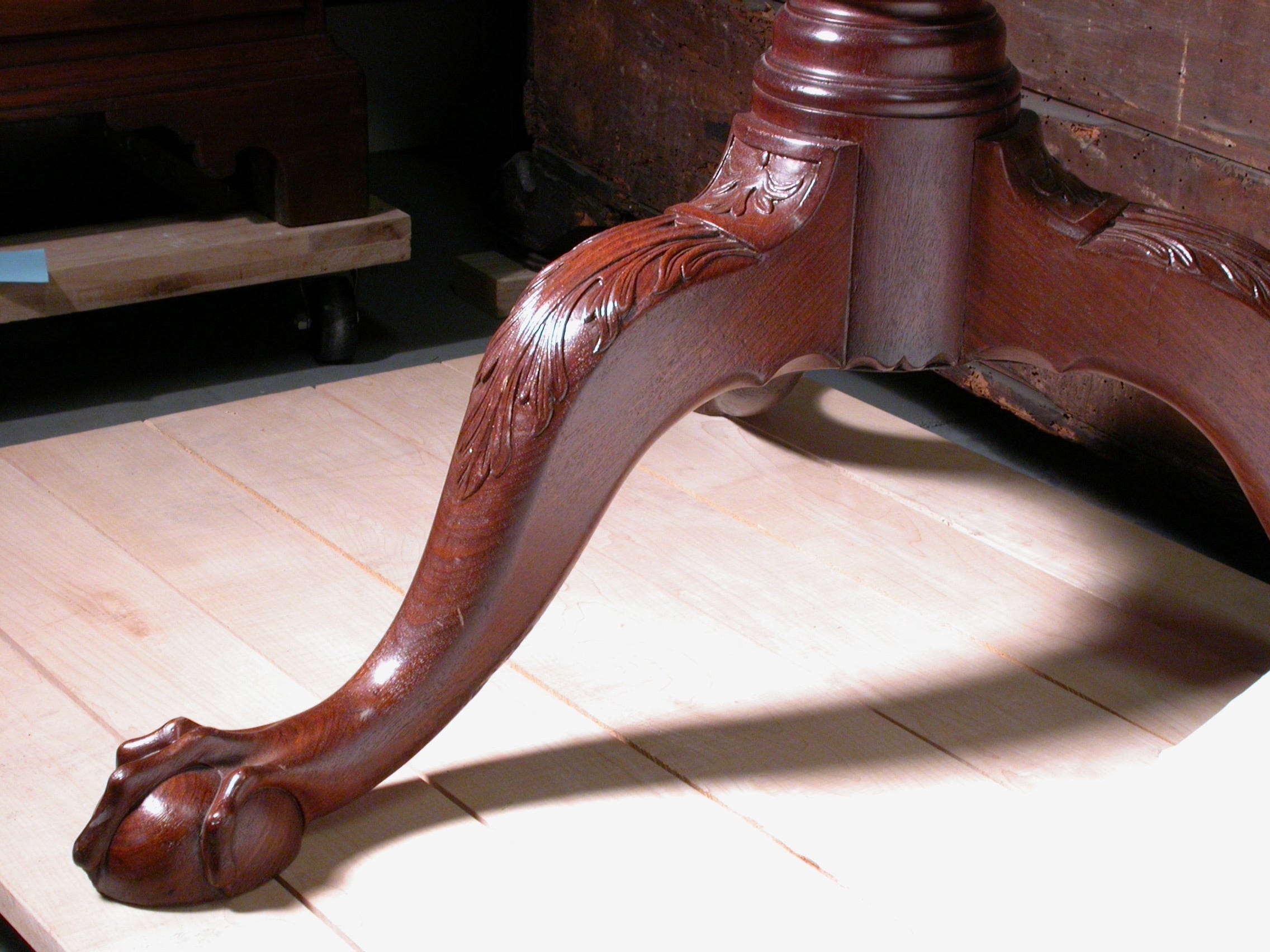
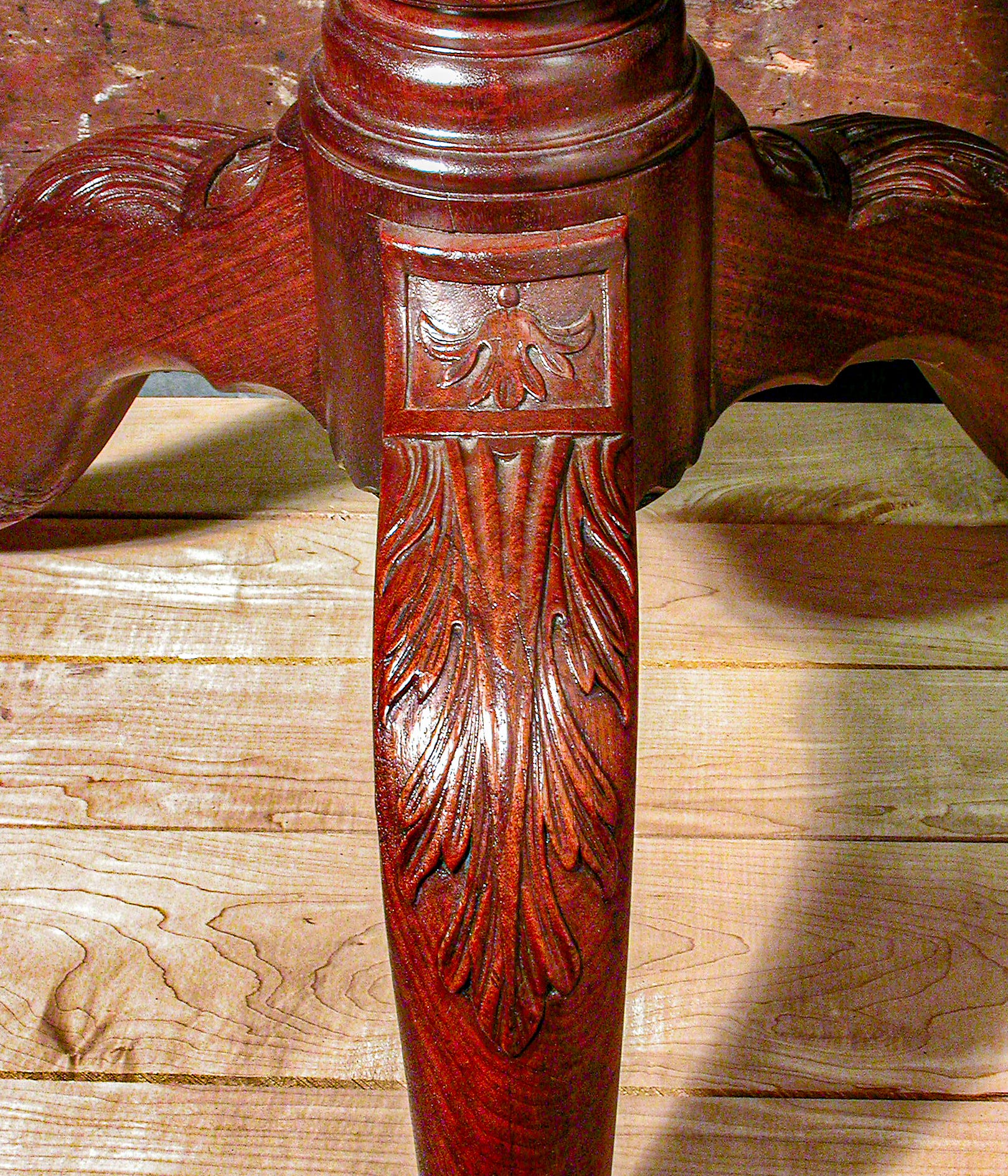
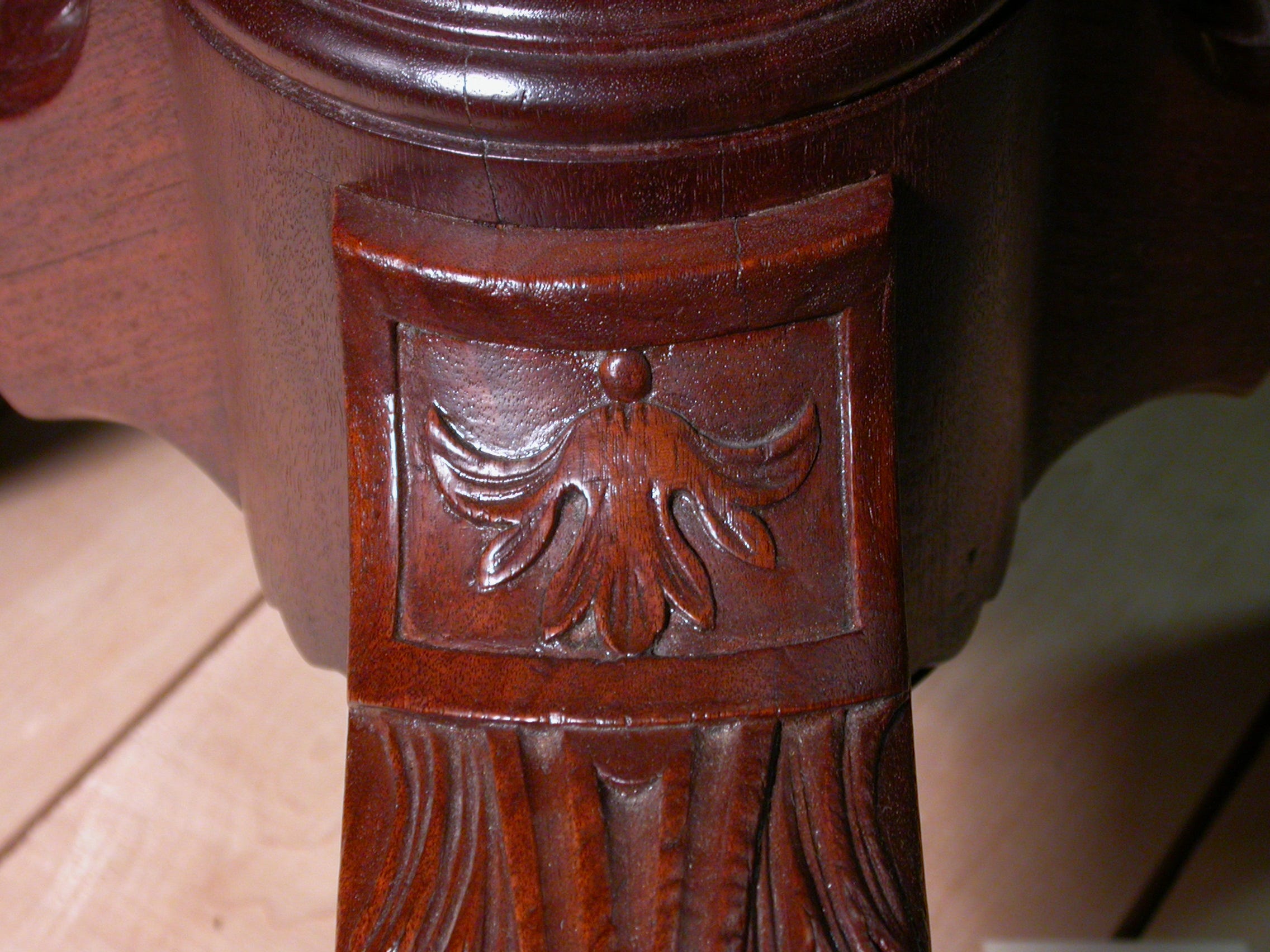
Fig. 8. Leg carving detail. Storb photo.
Fig. 9. Storb photo.
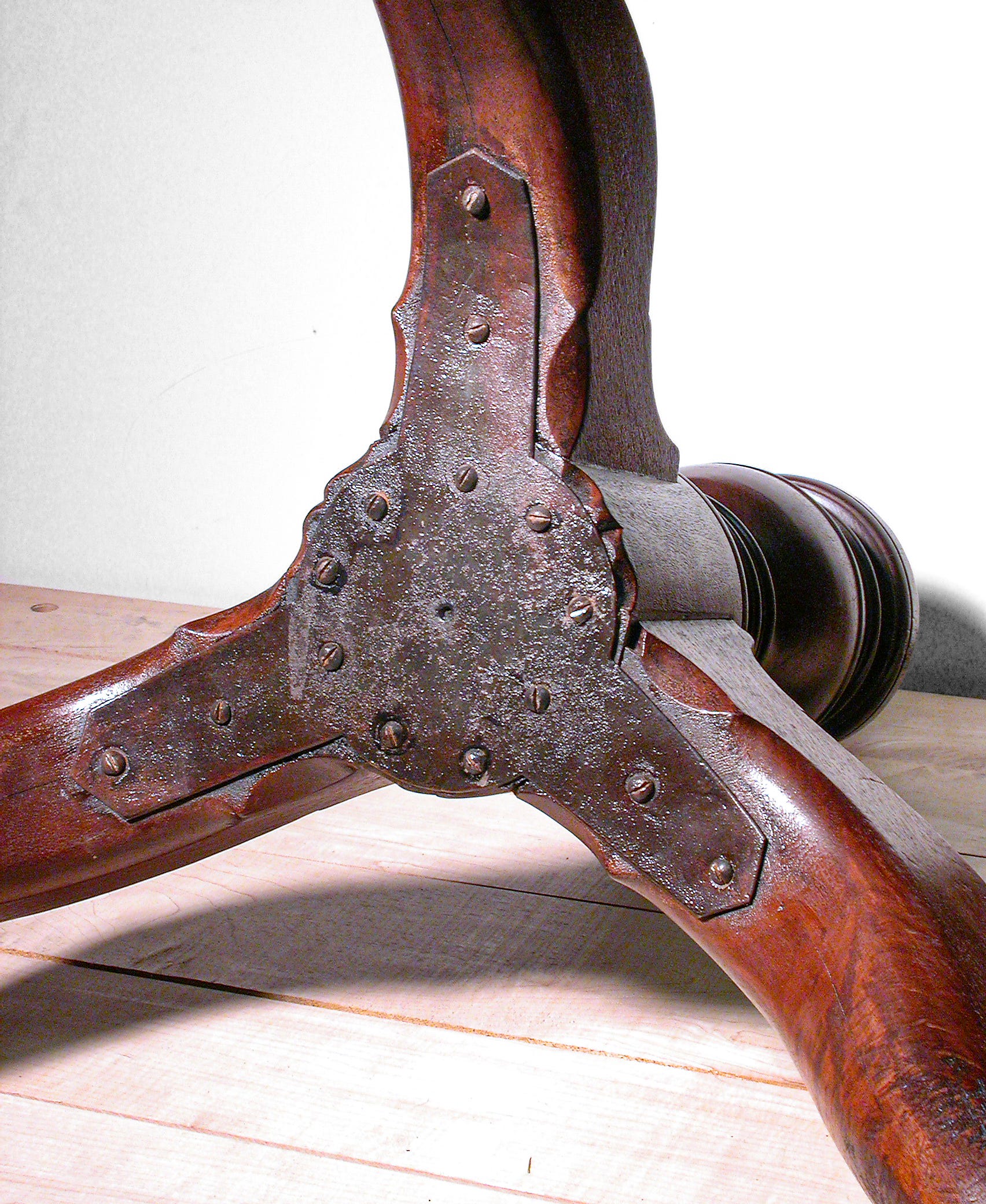
Fig. 10. The forged iron bracket helps to support the dovetailed leg-to-pillar joint. As with every other element of the table it is massive and attached with 15 dome-head hand made screws. Storb photo.
Thanks for reading Regarding Furniture! Subscribe for free to receive new posts and support my work.
Incredible piece, thanks for sharing. Has it been restored at all over the years or that is all original finish? Also wondering how flat the top has stayed over the years, being so massive? Was wood strictly air dried back then or did they use any sort of kiln?


Incredible piece, thanks for sharing. Has it been restored at all over the years or that is all original finish? Also wondering how flat the top has stayed over the years, being so massive? Was wood strictly air dried back then or did they use any sort of kiln?
great post & photos - massive yet refined piece of furniture